How Moissanite Rings Are Made: From CAD Design to Quality Inspection
A professional moissanite ring manufacturing process connects design, engineering, sampling, production, finishing, and inspection. Each stage gives buyers an opportunity to confirm specifications before the next stage begins. This is especially important for custom silver ring manufacturing, where a small change in ring thickness, stone size, setting height, or plating requirement can affect both appearance and production feasibility.
This guide explains the nine main steps used to develop and manufacture a moissanite ring for OEM and wholesale programs. At AphroSilver, buyers can use this process to review a design, identify technical risks early, and prepare a product for controlled mass production.
Quick answer: Moissanite rings are made by converting a design brief into a CAD model, validating the model, producing a wax or resin pattern and metal casting, finishing the ring, setting and securing the moissanite, applying the required plating, completing quality inspection, and preparing the approved product for shipment.
Request a CAD Feasibility Review
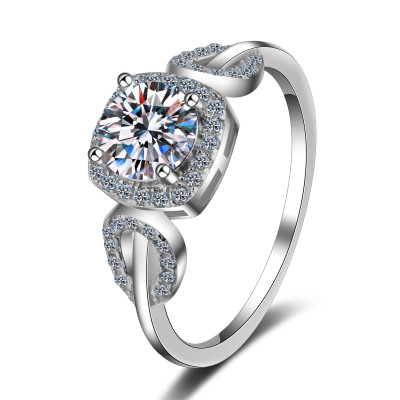
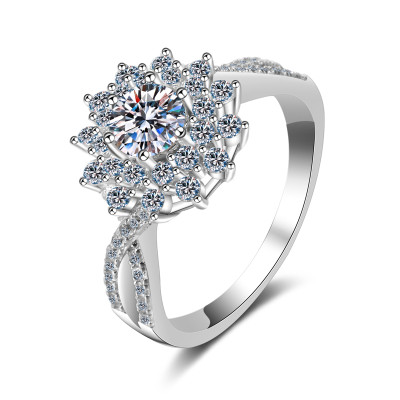
For a ready-to-review reference style, explore the silver moissanite ring collection and compare the design language with your own product brief.
The Moissanite Ring Manufacturing Process: Nine Steps from Concept to Delivery
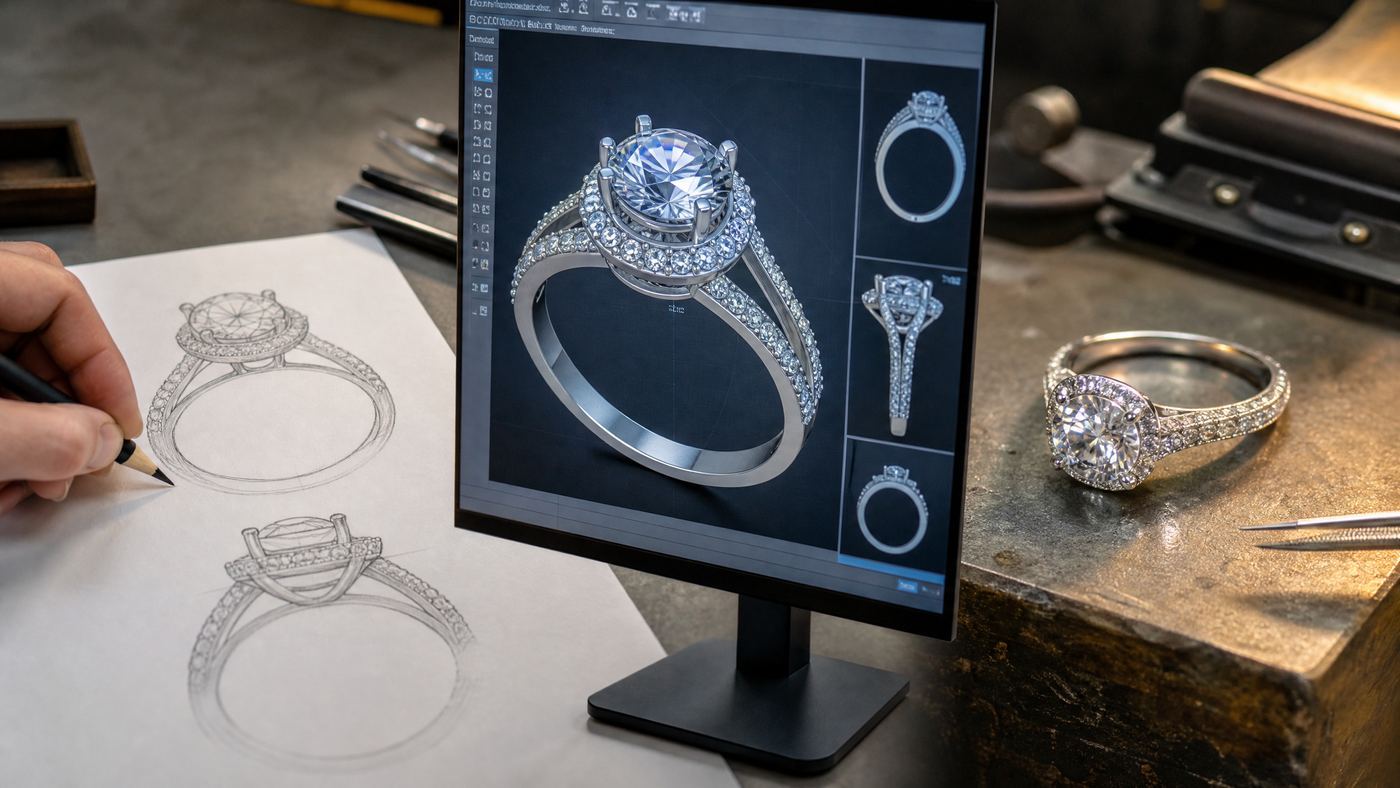
The exact workflow can vary according to the ring design, metal, stone configuration, finish, and order quantity. However, a well-controlled OEM program normally follows nine connected steps:
- Requirements and technical assessment
- CAD jewelry design
- Mold making or digital pattern preparation
- Sample production and approval
- Mass production
- Stone setting and security checks
- Polishing and surface preparation
- Plating or other final surface treatment
- Final inspection, packaging, and shipment preparation
The sequence matters. For example, setting stones before the ring has the correct surface finish can create avoidable rework. Likewise, starting mass production before a sample is approved can multiply a design issue across the entire order.
1. Requirements and Technical Assessment
The process begins with a clear product brief. The buyer should define the ring style, target customer, metal material, ring sizes, moissanite shape and dimensions, color or clarity requirements, finish, plating, packaging, and expected order quantity.
The manufacturer then reviews whether the design can be produced consistently. This technical assessment considers areas such as:
- Ring wall and shank thickness
- Prong, bezel, halo, or channel-setting geometry
- Stone tolerances and seat dimensions
- Minimum details that can be cast and polished safely
- Size range and the effect of resizing on the design
- Required plating thickness or color
- Packaging and labeling requirements
This stage is where buyers should raise commercial requirements as well as aesthetic preferences. A ring may look correct in a reference image but still need structural changes before it can become a stable production product.
For a sourcing team, the most useful output is a written specification that both sides can review. It should identify what is fixed, what is adjustable, and which elements require sample approval.
What should a buyer provide before CAD design?
At minimum, provide reference images or sketches, dimensions, stone information, metal requirements, preferred finish, ring-size range, target quantity, and packaging expectations. If a brand has a technical drawing, logo file, or existing sample, that material should also be shared at the beginning.
2. CAD Jewelry Design Process
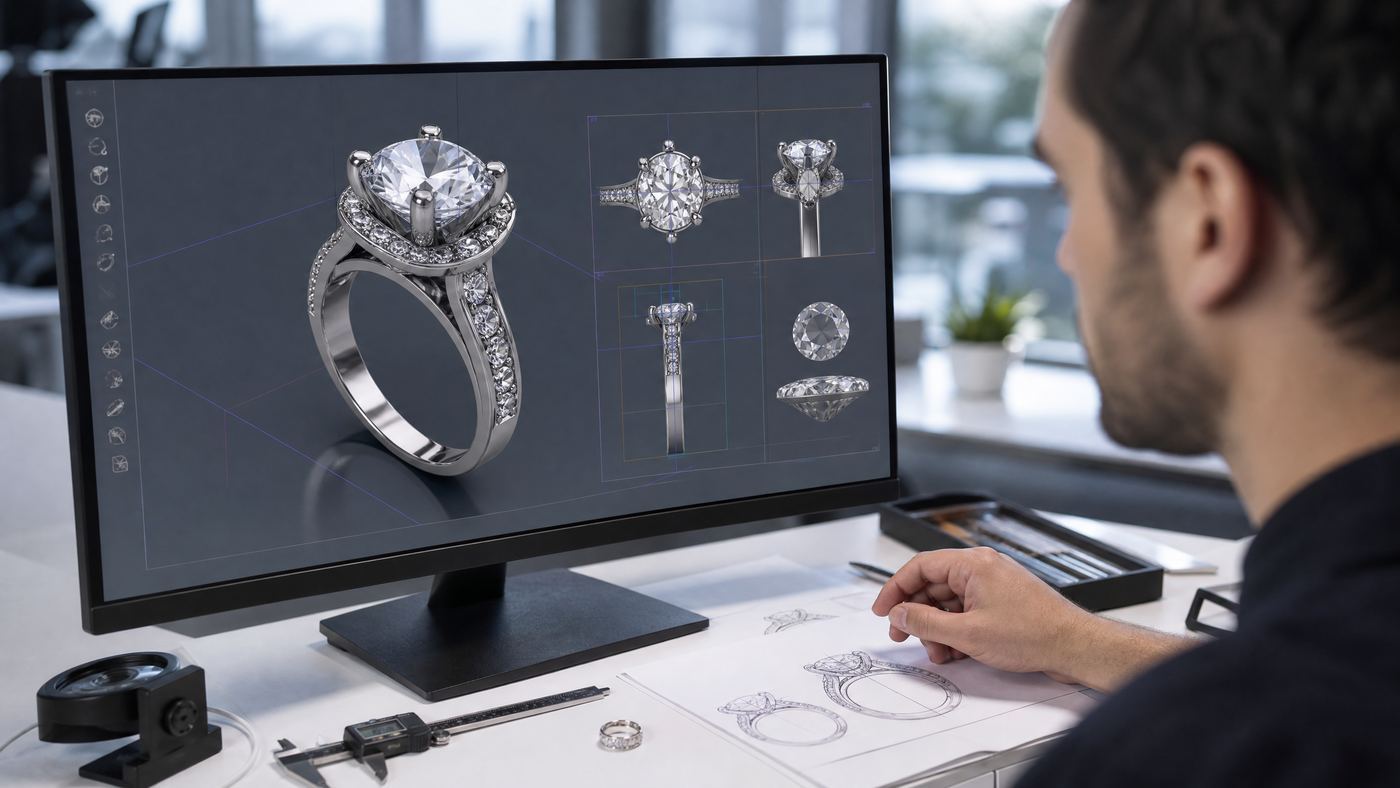
The CAD jewelry design process converts the approved brief into a three-dimensional model. The designer defines the ring profile, stone seats, prongs, gallery, shoulders, underside, engraving areas, and other production details.
CAD is not only a visual design tool. It is also a production-control tool. A properly prepared model allows the team to check whether stones fit the setting, whether the ring is sufficiently supported, and whether the design can be cast, polished, and plated without losing important details.
The buyer should review more than the top view. Side, underside, and perspective views can reveal issues that are not visible in a single product image. Pay particular attention to the height of the center stone, the transition between the setting and shank, the thickness of delicate details, and the clearance between stones.
A CAD feasibility review is useful before the model is finalized because it can identify a structural problem while the design is still easy to change. Once a mold or sample has been produced, revisions may require additional time and cost.
Send Your Design to AphroSilver
3. Mold Making and Digital Pattern Preparation
After CAD approval, the model is prepared for physical production. Depending on the project, the manufacturer may create a rubber mold, wax-injection mold, resin pattern, or another production pattern suitable for the selected manufacturing route.
The mold or pattern must reproduce the approved design accurately. It also needs to withstand repeated use if the order requires multiple units. Small weaknesses in the mold can lead to repeated inconsistencies, such as softened edges, uneven details, or dimensional variation between pieces.
For custom silver ring manufacturing, this step is particularly important when the design contains fine pavé work, thin shoulders, deep engraving, or multiple connected components. Buyers can also review the custom sterling silver jewelry service when a collection needs coordinated ring styles or related pieces. The production team may recommend a minor adjustment to improve filling, reduce distortion, or make polishing more consistent. Those adjustments should be documented and approved rather than made without a clear record.
4. Sample Production and Approval
The first sample is the buyer’s physical opportunity to verify the product before mass production. It should be assessed for overall proportions, ring size, metal appearance, stone position, setting symmetry, engraving, logo placement, finish, and packaging presentation.
Sample approval should be specific. Instead of approving a sample with a general message such as “looks good,” the buyer should confirm the details that define the production standard. These can include:
- Approved CAD version or drawing number
- Metal and plating specification
- Stone shape, size, and layout
- Ring size and size tolerance
- Surface finish and color
- Logo and engraving placement
- Packaging and labeling format
If a change is required, the manufacturer should update the CAD file, sample record, or production specification so that the approved version is clear. A documented sample approval reduces the risk of producing a large quantity from an outdated file or an incomplete instruction.
What does a buyer approve at the sample stage?
A buyer approves the physical appearance and the measurable product requirements. The approval should cover design proportions, materials, stone security, finish, branding details, and packaging expectations. If any of these elements remain undecided, the sample is not yet a complete production reference.
5. Mass Production
Once the sample and specifications are approved, the manufacturer can begin mass production. The production team prepares materials, patterns, casting or forming steps, components, and work instructions according to the approved product record.
Consistency is the main concern at this stage. The production team should control the variables that affect the final ring, including metal weight, dimensions, casting quality, stone seats, assembly, polishing, and plating. An experienced OEM partner also separates design changes from routine production adjustments. A design change should be reviewed with the buyer because it may affect the appearance or performance of the approved product.
For wholesale orders, production planning should also account for inspection time, rework capacity, replacement units, packaging, and shipping schedules. The fastest manufacturing route is not always the route that provides the most reliable delivery. A realistic plan protects both the launch date and the product standard.
6. Stone Setting and Gem-Setting Security Checks
Stone setting gives the ring its visual character, but it is also one of the most important functional stages. The setting method may include prongs, a bezel, a halo, pavé, channel setting, or a combination of methods.
The setting team positions each moissanite according to the approved layout. The setter then secures the stone by forming or tightening the surrounding metal. The goal is to hold the stone firmly without damaging the stone, distorting the setting, or creating an uneven appearance.
Gem-setting security checks should examine whether stones are seated evenly and whether the prongs or surrounding metal make full, appropriate contact. The inspector should also look for movement, sharp edges, gaps, visible tool marks, uneven spacing, and inconsistent alignment.
Stone security should be checked again after polishing and plating because later finishing operations can expose a weak seat or affect the appearance of fine setting details. This layered inspection is more reliable than checking the ring only once at the end.
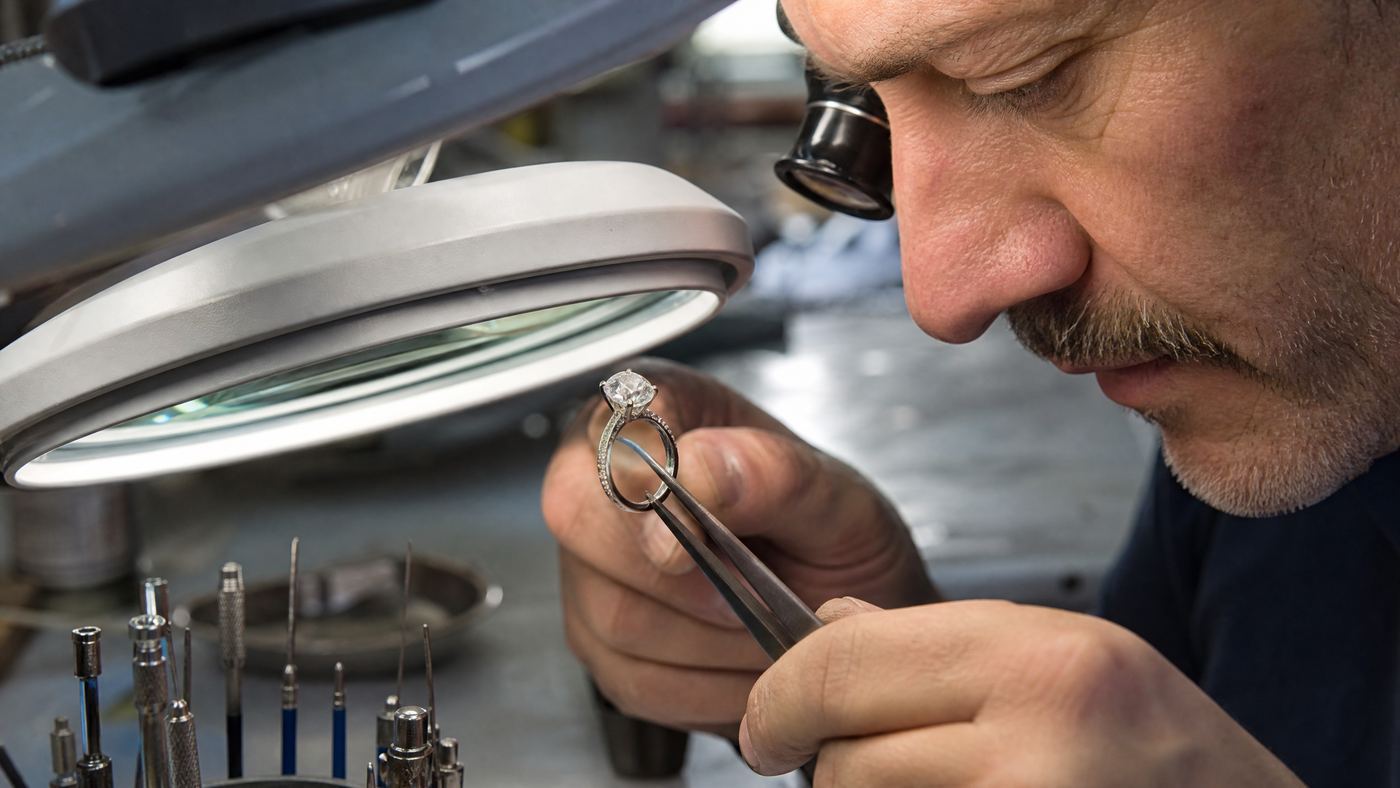
7. Polishing and Surface Preparation
Polishing removes production marks and prepares the ring for its final appearance. The process may include pre-polishing, fine polishing, smoothing of edges, and cleaning of areas around the setting.
A good polish should create a consistent surface without rounding important design lines or weakening delicate details. The level of polish also depends on the product direction. A high-shine ring, satin-finish ring, brushed ring, and textured ring each require a different surface treatment.
The manufacturer should protect the relationship between the finish and the setting. Excessive polishing around prongs can reduce their definition, while insufficient polishing can leave visible marks. A buyer’s sample approval should identify the intended finish clearly enough for the production team to reproduce it.
8. Plating and Final Surface Treatment
Plating changes the ring’s surface color and can contribute to the intended appearance and wear performance. The chosen treatment may depend on the base metal, target color, product positioning, and buyer requirements.
Before plating, the ring must be clean and properly prepared. Surface contamination, uneven polishing, or residue can create visible defects such as discoloration, dull patches, pinholes, or inconsistent tone. Plating should therefore be treated as part of a controlled finishing sequence rather than as a cosmetic step added at the very end.
The final finish should be compared with the approved sample under consistent lighting. If a brand uses product photography, color consistency is also important because a visible difference between samples and delivered goods can create avoidable customer-service issues.
9. Final Inspection Before Wholesale Delivery
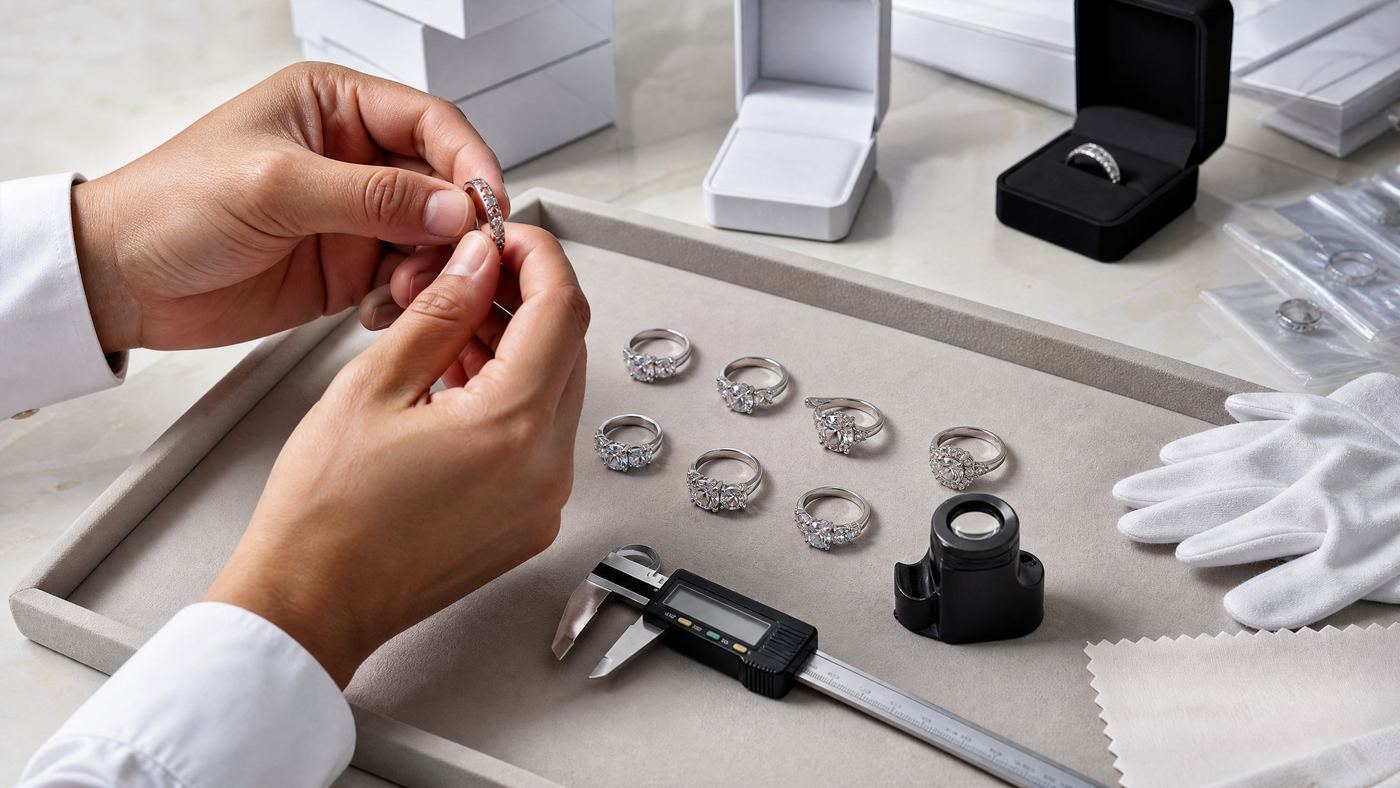
Final inspection confirms that the finished rings match the approved requirements before packaging and shipment. This is the last opportunity to identify defects without placing the burden on the buyer or the buyer’s customers.
A practical moissanite ring quality inspection should include the following areas:
Appearance and dimensions
Inspect the ring for scratches, dents, casting marks, uneven edges, discoloration, plating defects, and visible surface contamination. Confirm ring size, key dimensions, stone layout, logo position, and overall symmetry against the approved reference.
Stone and setting security
Check that stones are correctly positioned, seated, aligned, and secure. Look for movement, loose prongs, gaps, chipped edges, sharp setting points, and inconsistent spacing.
Finish and branding
Compare polish, texture, plating color, engraving, logo placement, and other brand details with the approved sample. The inspection standard should distinguish acceptable variation from a defect that requires rework or replacement.
Quantity and packaging
Verify order quantity, SKU or style information, size breakdown, labels, individual packaging, cartons, and shipping marks. Packaging and shipment preparation should protect the rings from scratching and prevent mixed styles or sizes during delivery.
The inspection result should be recorded in a way that can be traced to the order, product version, and approved sample. This creates a useful reference for repeat orders and future product improvements.
Discuss OEM and Custom Ring Production
How to Reduce Defects in a Custom Moissanite Ring Program
Most avoidable defects are easier to prevent before production than to correct after delivery. Buyers can improve the process by supplying complete requirements, approving the CAD model from multiple angles, confirming a physical sample, and keeping one controlled version of the product specification.
It is also useful to separate visual preferences from technical requirements. “Make the ring delicate” is a design direction, but it does not define a measurable minimum thickness. A more useful specification identifies the relevant dimensions, acceptable tolerances, stone configuration, surface finish, and inspection criteria.
For repeat orders, retain the approved sample record and compare new production against the same standard. If the brand changes a stone size, plating color, ring profile, or packaging format, treat the change as a new approval point rather than assuming the original standard still applies.
If you are developing a new collection, adding a custom silver ring to an existing line, or sourcing a wholesale moissanite ring, the next step is to review the design before production begins. Send AphroSilver your reference images, CAD file, target materials, stone requirements, order quantity, and delivery expectations.
AphroSilver’s OEM silver jewelry manufacturing service is available for brands and sourcing teams reviewing design feasibility, sampling, production specifications, and inspection requirements.
Request Your CAD Feasibility Review
Ready to turn a ring concept into a production-ready product? Contact AphroSilver with your design brief and let the technical review begin.
Frequently Asked Questions About How Moissanite Rings Are Made
The timeline depends on design complexity, CAD revision cycles, sample approval, mold requirements, order quantity, stone availability, finishing, and packaging. A simple repeat style can move faster than a new design with multiple revisions. The most reliable estimate is based on an approved brief and a confirmed production plan.
For a new custom design, CAD is strongly recommended because it allows the buyer and manufacturer to review proportions, stone seats, clearances, and production details before making a mold or sample. For an established repeat style, an existing approved model may be used if it is still accurate and available.
Check the overall shape, ring size, metal appearance, stone size and alignment, setting security, surface finish, logo or engraving, and packaging. Review the ring from the top, side, and underside. A sample should be approved against a written specification, not only against a product photograph.
Inspection combines visual review and dimensional or functional checks. The team examines the ring’s appearance, stone security, setting alignment, finish, branding details, quantity, and packaging. The exact inspection criteria should be agreed before production so that the buyer and manufacturer share the same definition of an acceptable product.
AphroSilver can be approached for OEM and custom silver jewelry manufacturing discussions, including a review of design feasibility, sampling requirements, production specifications, finishing, inspection, and delivery preparation. Share your CAD file, sketch, reference image, or product brief to begin the assessment.
An OEM moissanite ring is developed or adjusted to a brand’s specifications, while a ready-made ring is selected from an existing product range. OEM production can include custom CAD design, metal and plating requirements, stone layout, branding, packaging, and an approved pre-production sample.
A manufacturer normally needs the design file or reference images, ring style, metal type, moissanite shape and size, ring-size range, finish, branding requirements, estimated order quantity, packaging needs, and target delivery date. A complete brief helps the manufacturer assess feasibility and prepare a more useful quotation.
A physical sample is recommended for a new custom design because it lets the buyer verify proportions, stone alignment, setting security, surface finish, branding, and packaging before mass production. For an established repeat style, the previously approved sample and production record may serve as the reference.
Cost is affected by design complexity, metal weight, stone size and quantity, CAD and mold requirements, setting method, finishing, plating, packaging, order quantity, and inspection requirements. Confirming the CAD model and sample early helps reduce unexpected revision and rework costs.
A brand can reduce defects by using a controlled product specification, approving CAD from multiple views, confirming a physical sample, defining acceptable tolerances, checking stone security, and completing final inspection before packaging. The same approved reference should be used for repeat orders.
Send a sketch, reference image, CAD file, or existing sample information together with the target metal, moissanite details, ring sizes, finish, logo requirements, estimated quantity, and delivery expectations. AphroSilver can then review the design and identify technical questions before sampling.
Selected from the Silver Moissanite Ring collection
Explore six real AphroSilver styles for wholesale sourcing, collection planning, and OEM ring development. Each card links to the English product page for current specifications and inquiry details.
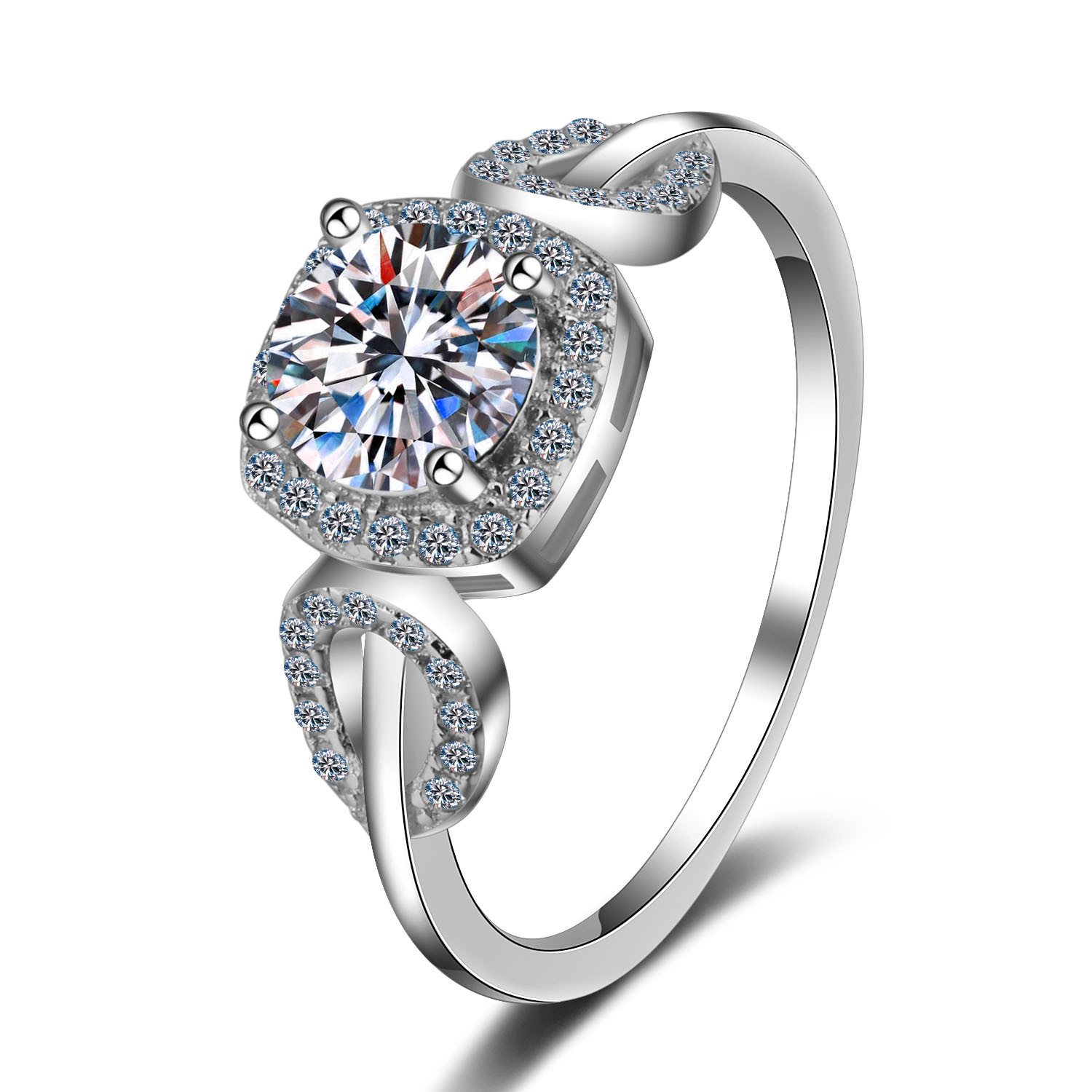
Model AZ034-J
A luxury 1ct moissanite ring in 92.5% silver with VVS1 moissanite quality, suitable for wholesale jewelry sourcing and engagement collections.
View product details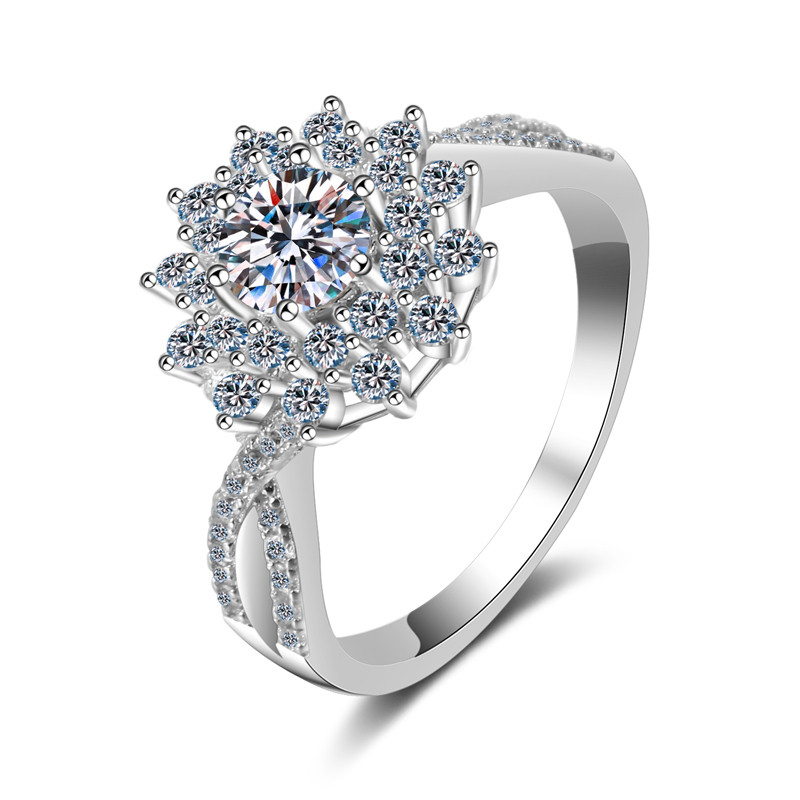
Model AZ030-J
This 925 sterling silver eternity band features D Color VVS1 moissanite and a low-MOQ direction for jewelry brands building wedding or stacking-ring ranges.
View product details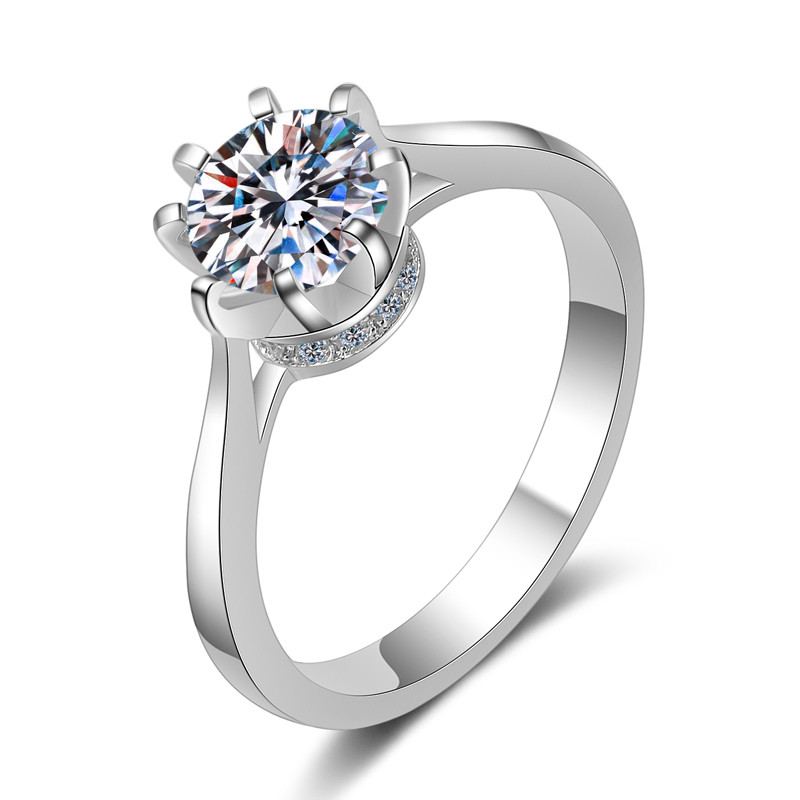
Model AZ021-J
A classic six-prong solitaire design using 92.5% silver and VVS1 moissanite, positioned for wholesale engagement-ring and fine-jewelry programs.
View product details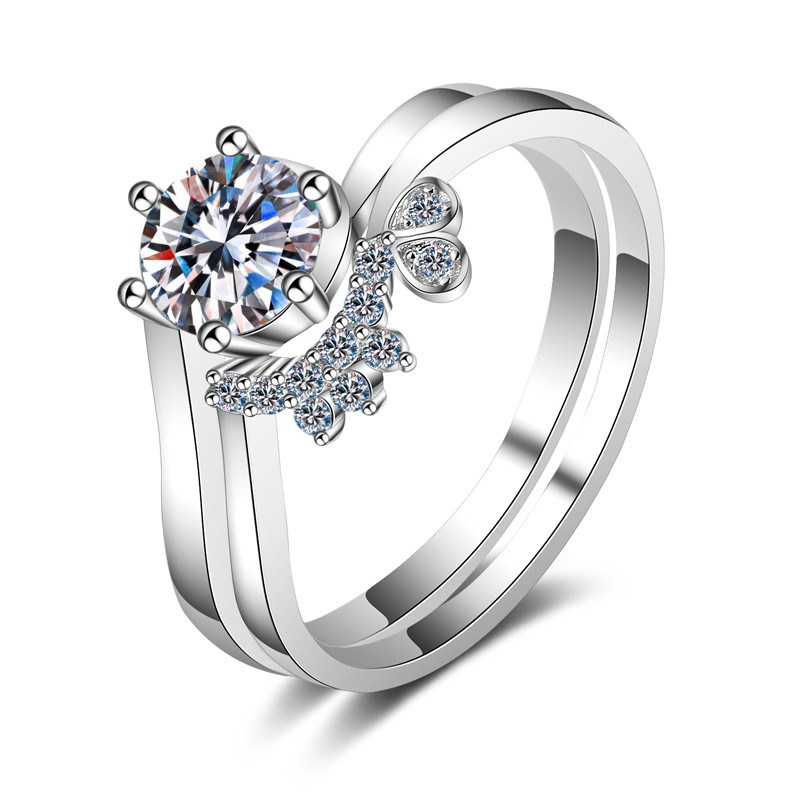
Model AZ019-J
A polished 0.8ct solitaire style in 925 sterling silver, with low-MOQ and OEM/ODM positioning for boutiques and online jewelry brands.
View product details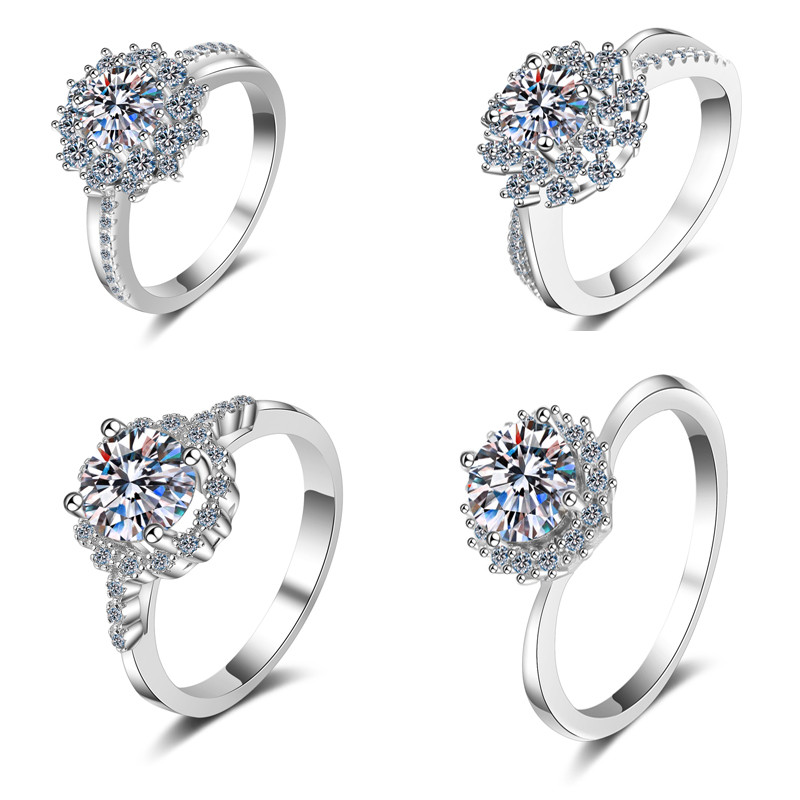
Models AZ001-J / AZ008-J / AZ013-J / AZ016-J
This bulk wholesale range uses 92.5% sterling silver with AAAA moissanite quality, giving buyers a practical starting point for a coordinated ring assortment.
View product details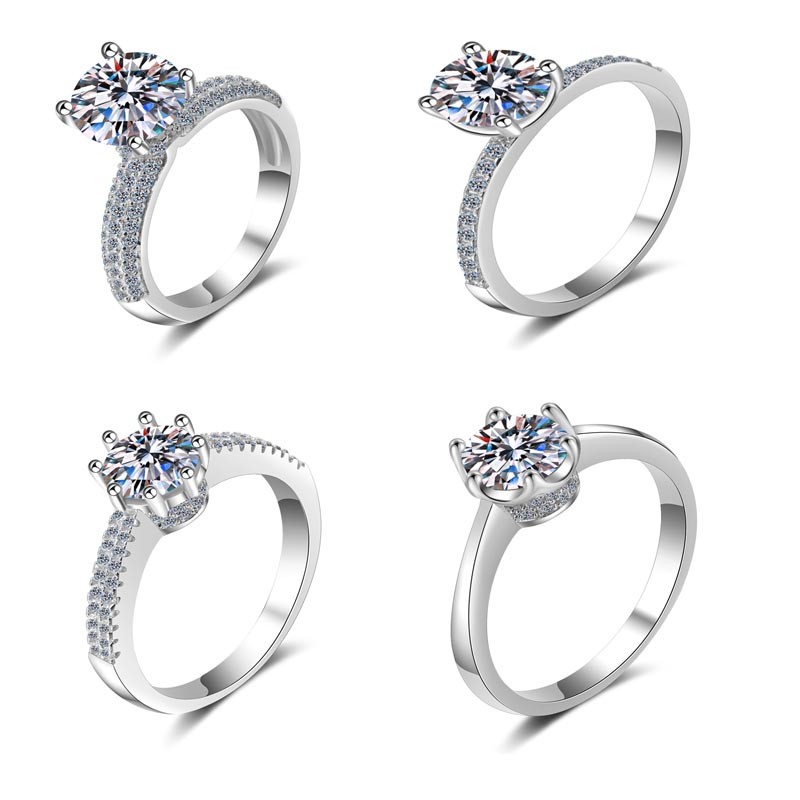
Models AZ002-J / AZ014-J / AZ015-J / AZ017-J
A luxury 925 silver moissanite range with AAAA moissanite quality, designed for brands considering custom development and wholesale jewelry collections.
View product details