How Sterling Silver Tennis Bracelets Are Made: Step-by-Step Factory Process
Aug 17,2026
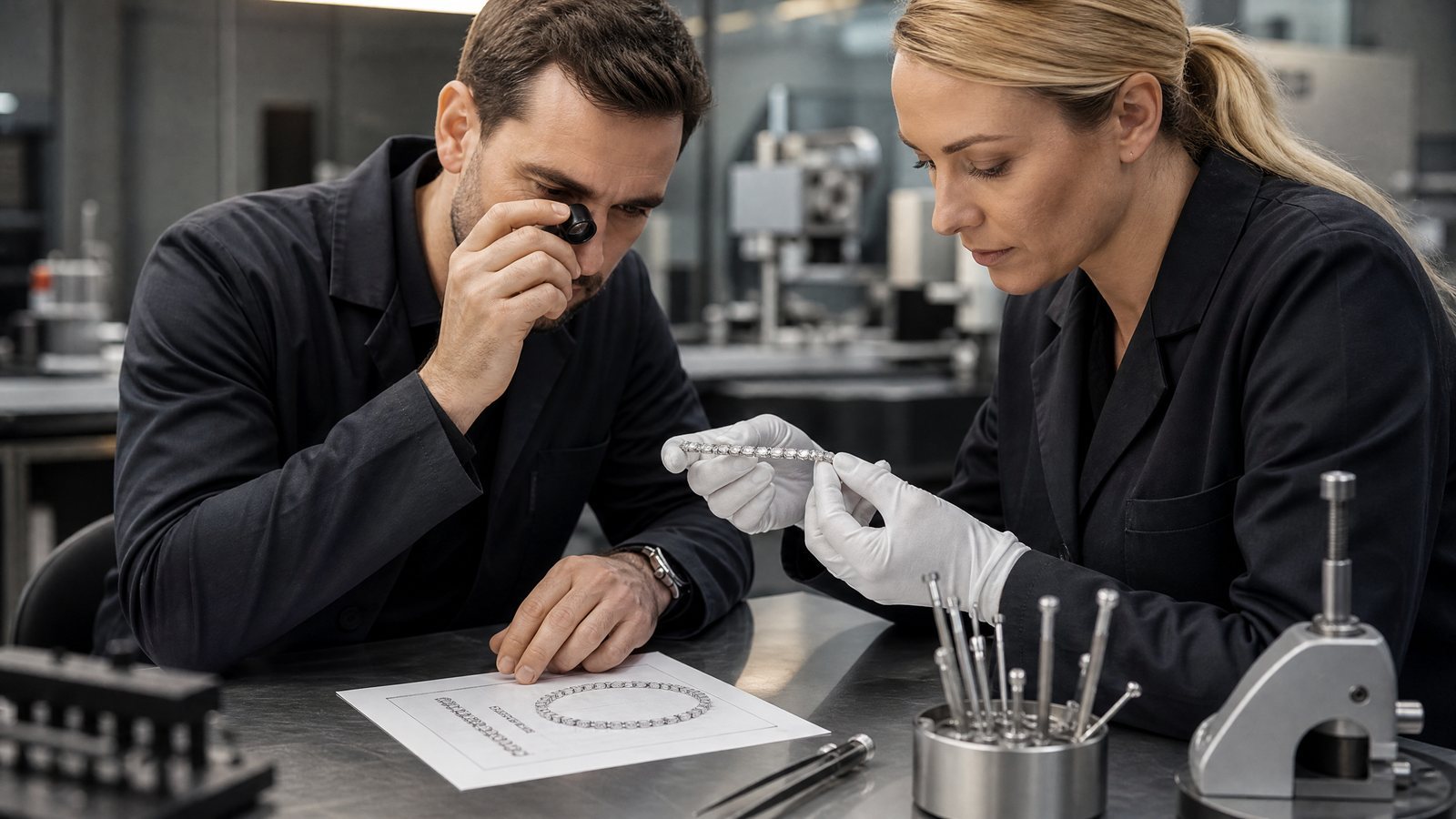
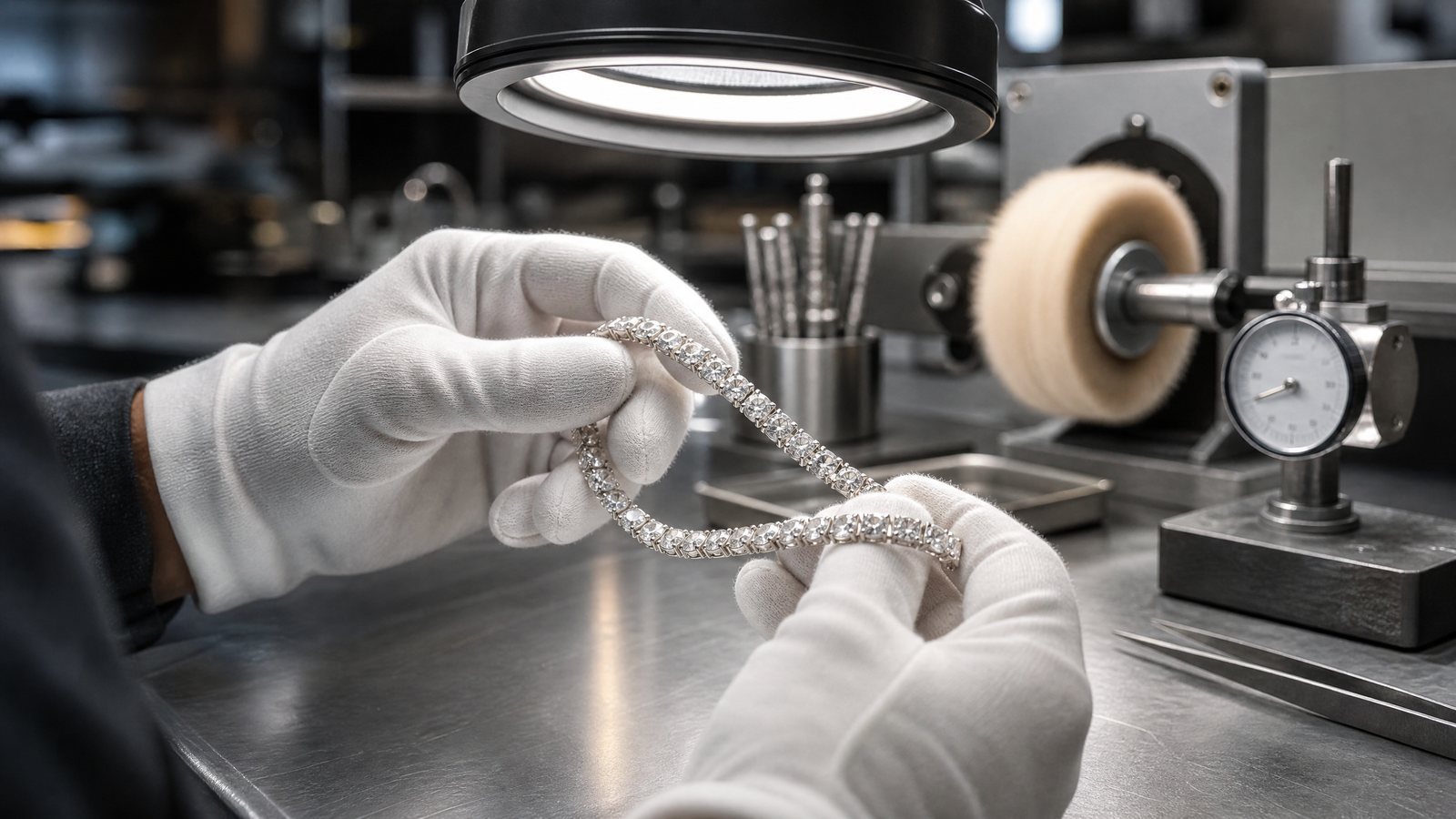
Sterling silver tennis bracelets are made through a controlled manufacturing process that usually includes design confirmation, 925 sterling silver sourcing, casting or stamping, component assembly, stone setting, polishing, optional rhodium plating, and final quality inspection. The exact route depends on the design, stone specification, finish, and agreed production standard.
A tennis bracelet may look simple at first glance: a continuous row of stones connected by slim metal links. In production, however, every link must balance appearance, flexibility, comfort, stone security, and repeatability.
For jewelry brands and retailers, the real question is not only “how are tennis bracelets made?” It is also “how can a factory make the same design consistently at scale?” In practical terms, how are tennis bracelets made when a buyer needs repeatable quality across a collection?
This guide explains the tennis bracelet manufacturing process from a buyer’s perspective. It follows the main stages used by a professional sterling silver tennis bracelets factory, while distinguishing between design-dependent options and quality checks that should be documented before shipment. AphroSilver uses process transparency to help jewelry businesses evaluate suppliers, prepare a clear product brief, and move from an approved concept to reliable tennis bracelet production.
Why the Manufacturing Process Matters for Buyers
For a wholesale or private-label buyer, a tennis bracelet is a system of connected components rather than one solid piece. The chain, end fittings, clasp, stone seats, prongs, surface finish, and plating all affect the final product. A small variation in one part can influence how the bracelet bends, how the stones line up, or how securely the clasp closes.
A capable custom tennis jewelry factory therefore needs more than a visually attractive sample. It needs a repeatable workflow that connects technical drawings, material control, production records, in-process inspection, and pre-shipment testing. This is especially important when a brand orders multiple lengths, stone sizes, finishes, or packaging configurations.
Buyer concern
Manufacturing question to clarify
Why it matters
Metal identity
Is the product specified and marked according to the agreed silver standard?
It prevents material and marketing claims from becoming ambiguous.
Bracelet flexibility
How are links connected and tested for smooth articulation?
It influences comfort, drape, and long-term wear.
Stone security
Which setting method and inspection points are used?
It helps reduce loose, uneven, or poorly aligned stones.
Surface appearance
What polishing, plating, and color standards apply?
It creates consistency across samples and bulk orders.
Shipment readiness
Which QC records and tests are completed before packing?
It gives the buyer evidence that the order matches the approved standard.
In the United States, the Federal Trade Commission’s jewelry guidance states that marketers should not misrepresent a jewelry product’s metallic content, quality, manufacture, or other material aspects. Buyers should therefore align product descriptions with the factory’s material documentation and the requirements of the destination market.
Step 1: Sourcing 925 Sterling Silver for Tennis Bracelet Production
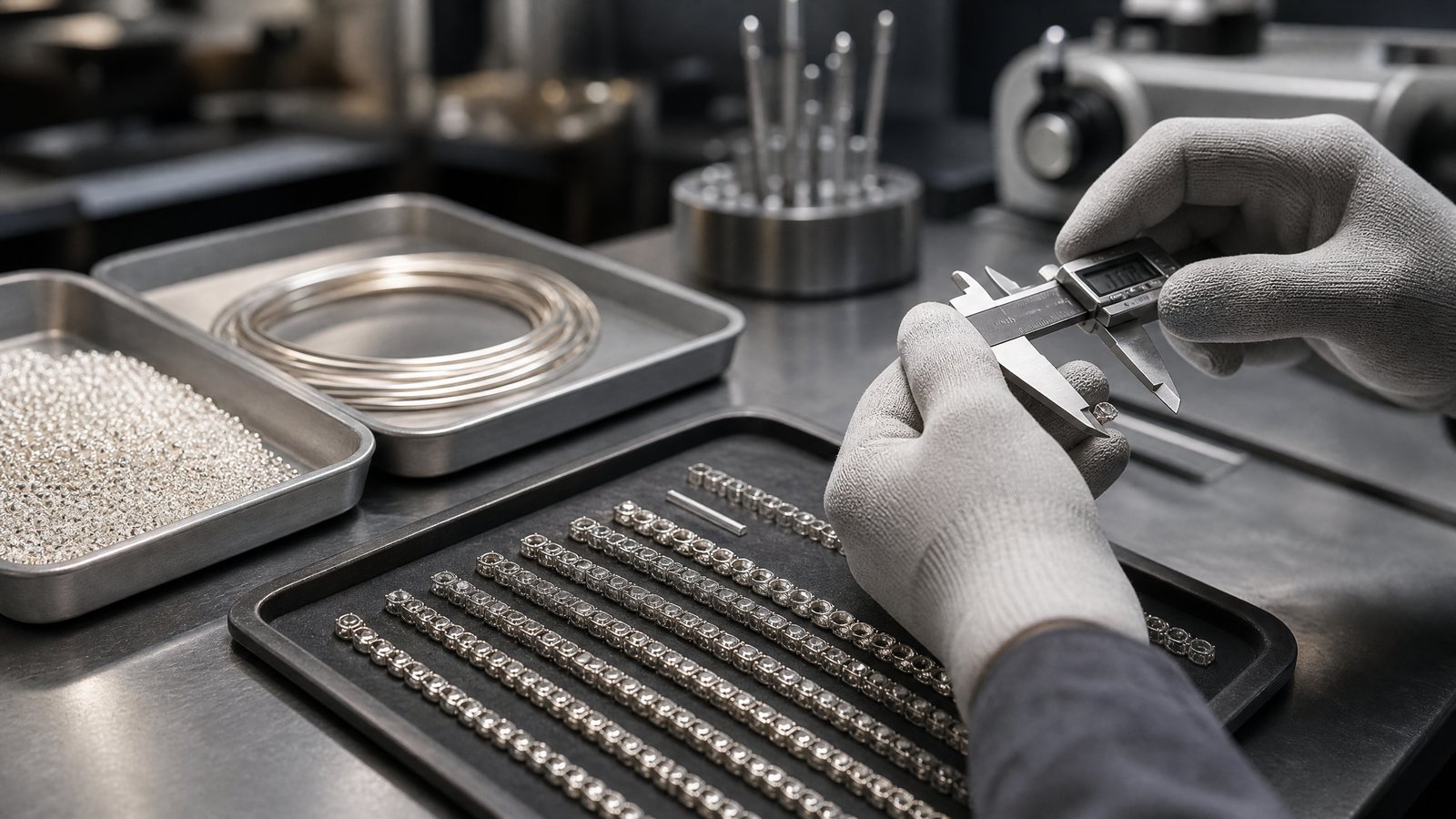
The first stage of tennis bracelet production is material planning. Buyers can also compare the wider silver tennis jewelry collection when reviewing related product directions. The factory reviews the approved design, estimated metal weight, component structure, finish, stone specification, target quantity, and delivery schedule. This information helps determine whether each part is better suited to casting, stamping, wire forming, machining, or a combination of methods.
What does 925 sterling silver mean?
In common jewelry terminology, “925 sterling silver” refers to an alloy containing 92.5% silver, with the balance made up of other alloying metals. Marking and compliance requirements can vary by market, so the product specification should state the required standard rather than relying on a generic label.
A professional silver jewelry factory should be able to explain how incoming material is identified and controlled. This is a useful point of comparison when selecting a tennis bracelet product range for a buyer’s collection. Depending on the order and the customer’s requirements, this may include supplier documentation, internal material records, alloy verification, weight checks, and sample testing.
What should a tennis bracelet material brief include?
A complete product brief should state the intended metal description, bracelet length and dimensions, approximate weight, stone type and size, setting style, surface finish, plating requirement, clasp construction, logo placement, packaging, and required quality checks. Clear information improves quotation accuracy and reduces the risk of a mismatch between the concept and the production sample.
Step 2: Casting and Stamping Silver Tennis Bracelet Components
Once the material plan and production drawings are approved, the factory selects the most suitable forming method for each component. This stage is where the design becomes a physical metal part.
Lost-wax casting for detailed components
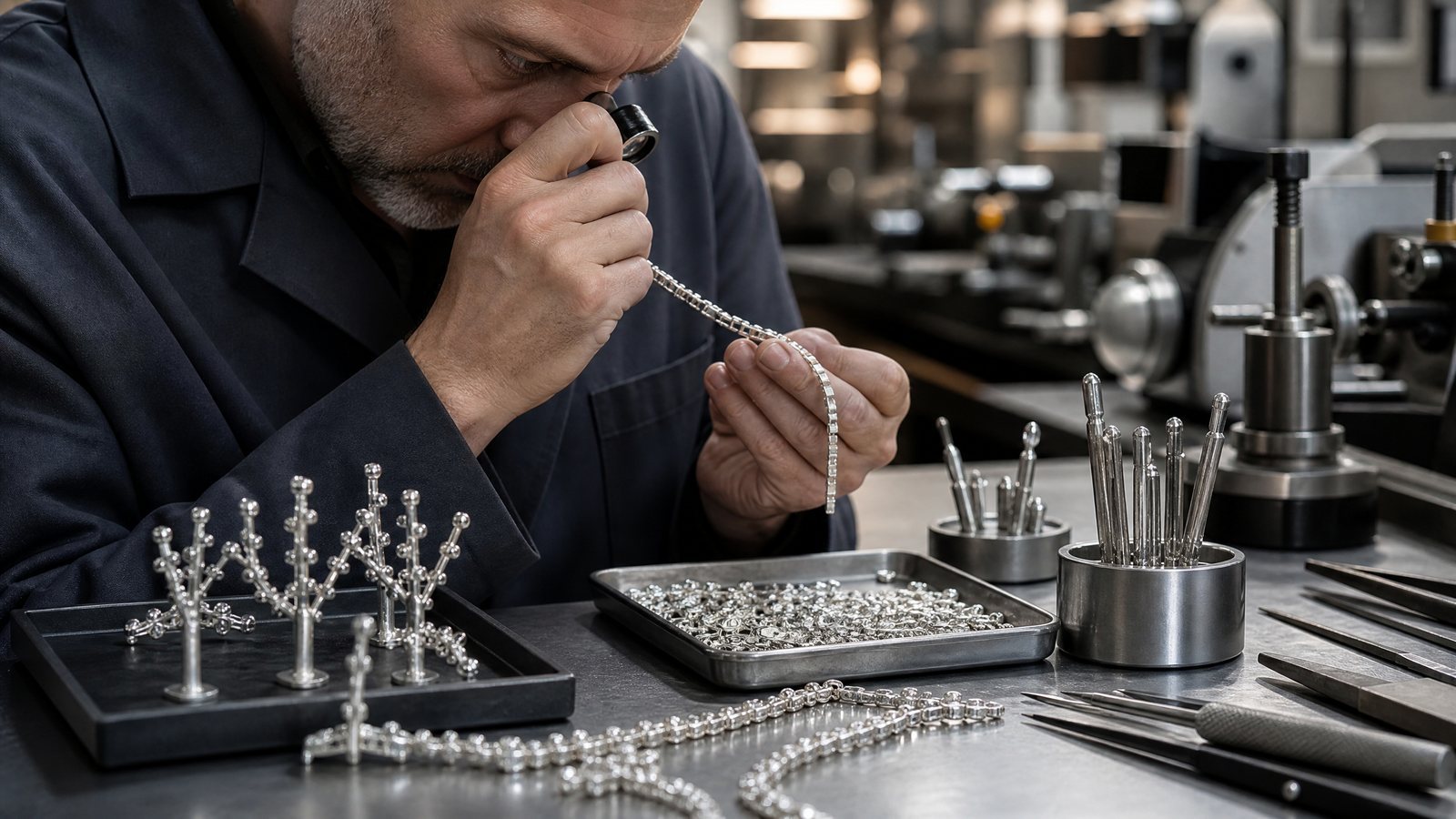
For detailed settings, connectors, end pieces, or custom shapes, investment casting—often called lost-wax casting—may be appropriate. In a typical workflow, a wax or castable pattern is created from a model, assembled with feed channels, surrounded by investment material, and heated so that the pattern leaves a cavity. Molten metal then fills the cavity. After cooling, the casting is removed, cleaned, and finished [3].
Modern jewelry production may combine CAD design, printed patterns, and traditional finishing. Digital modeling helps preserve a design and makes controlled revisions easier, while sprue design, casting cleanup, filing, and surface preparation still require skilled operators.
When is stamping suitable?
Stamping may be considered when a component has a suitable flat or consistent profile and the order volume supports tooling. A die forms the metal into a repeatable shape. Depending on the design, additional bending, drilling, cutting, calibration, or machining may be required.
The most advanced process is not automatically the most suitable one. A capable factory evaluates geometry, quantity, tolerances, finish, tooling cost, and development timeline before recommending casting, stamping, or a combined route.
Deburring, calibration, and pre-assembly checks
After casting or stamping, components are inspected for incomplete filling, sharp edges, deformation, visible pores, tool marks, and dimensional variation. Excess metal is removed and contact surfaces are adjusted. Technicians also check whether adjacent links move smoothly and whether the stone seats remain centered before finishing.
Step 3: Stone Setting in a Tennis Bracelet Factory
Stone setting is one of the most visible and sensitive stages in the tennis bracelet manufacturing process. A tennis bracelet depends on a consistent line of stones, so the setting process must control spacing, height, alignment, security, and movement.
How are stones positioned?
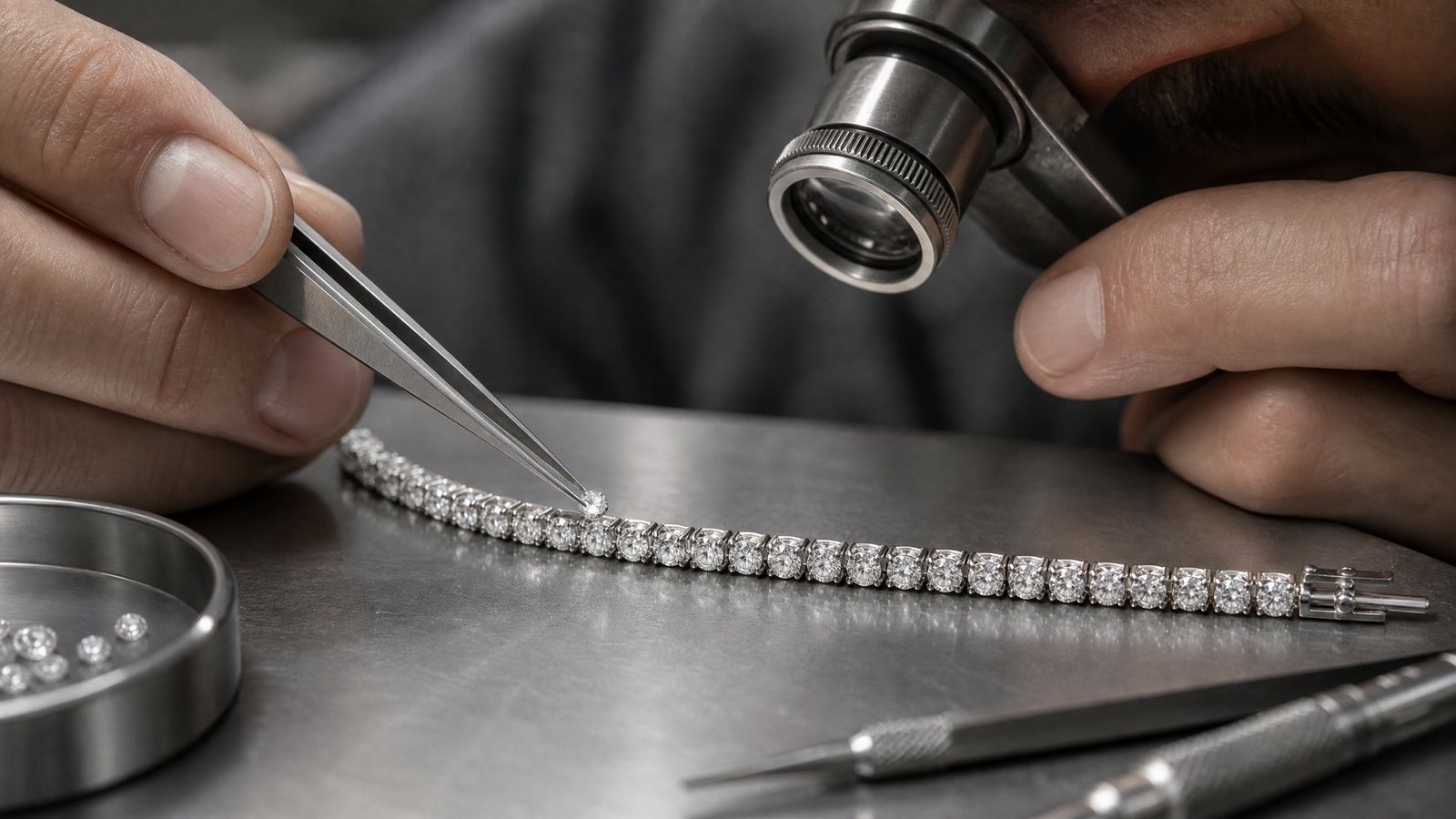
Before setting, the factory confirms or sorts stones according to the approved specification. The setter places each stone into its seat and secures it using the specified method. The objective is for every stone to sit at the correct depth and angle, with enough metal engagement to hold it without creating an uncomfortable or visually heavy surface.
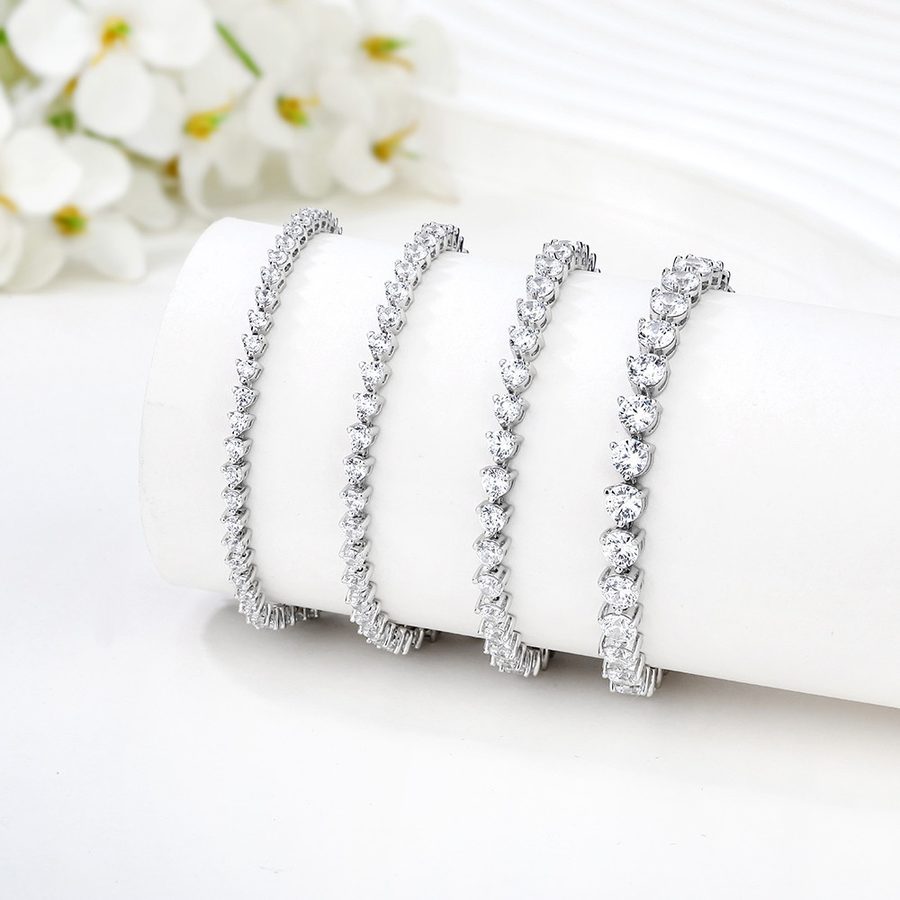
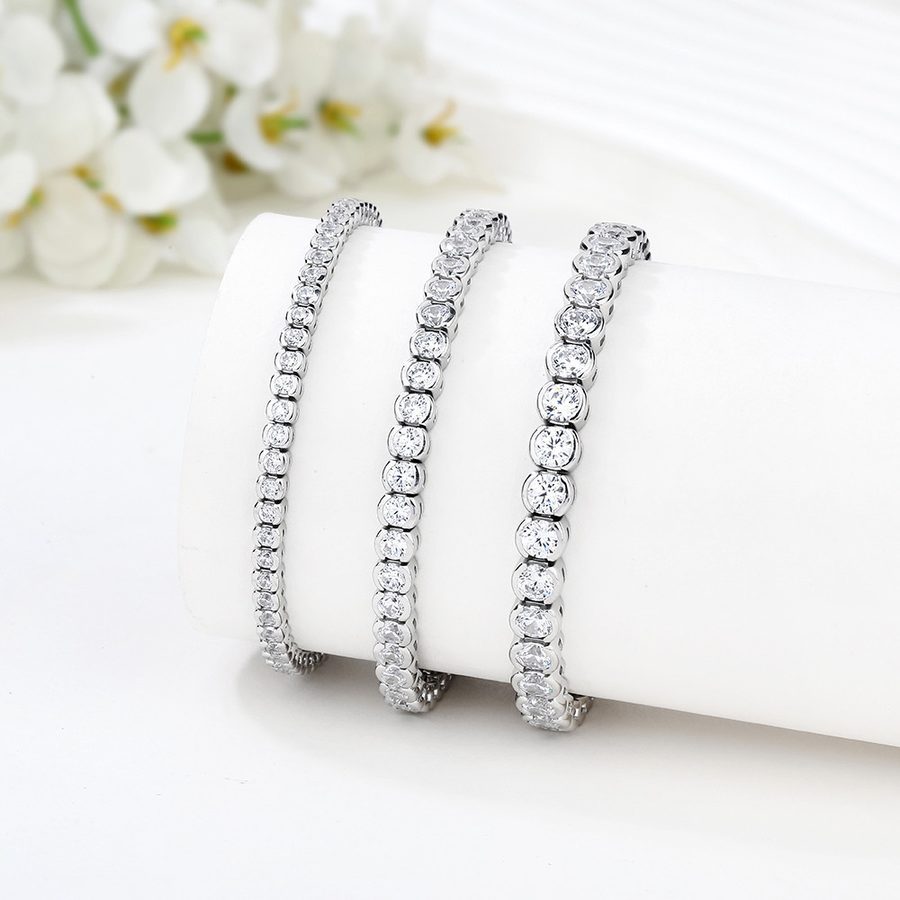
Common approaches include prong, shared-prong, bezel-style, and micro-pavé settings. The appropriate option depends on the design, stone dimensions, metal thickness, target price point, and required appearance. A product developer should approve a representative sample before bulk production because a setting that looks correct in CAD may need practical adjustment in metal.
How are alignment and flexibility controlled?
A tennis bracelet must be visually continuous while remaining flexible enough to follow the wrist. The factory checks whether the stones form a clean line, whether the links articulate without binding, and whether the bracelet lies naturally when curved.
The clasp and end components also require attention. They should align with the bracelet body, close with the intended resistance, and avoid sharp edges or unintended gaps. Logo details and custom marks should be checked against approved artwork before final finishing.
Step 4: Polishing, Rhodium Plating, and Quality Inspection
After forming and stone setting, the bracelet moves through surface preparation. The sequence may include filing, tumbling, pre-polishing, hand polishing, ultrasonic cleaning, plating preparation, plating, rinsing, drying, and final inspection.
Why does polishing matter?
Polishing removes or reduces visible tool marks and creates the intended level of brightness. Areas around prongs, connectors, clasp components, and narrow recesses require controlled attention because over-polishing can soften details or alter the fit of a setting.
Why use rhodium plating on sterling silver?
Rhodium plating applies a thin coating over the prepared jewelry surface. It is used to create a bright white appearance and can help protect the underlying surface from tarnish and wear; performance depends on preparation, plating conditions, base metal, usage, and care [4].
Plating is not a substitute for good polishing. If the surface underneath is uneven, the coating will not hide every defect. Brands should also avoid unsupported claims such as “permanent” or “scratch-proof” unless those claims are backed by a defined test and are appropriate for the market.
Quality Control: What a Custom Tennis Jewelry Factory Checks Before Shipping
Quality control should not be limited to the final packing table. For wholesalers, a documented inspection route can support a more reliable one-stop wholesale solution. It is more effective when checks are placed at material receiving, component forming, pre-setting, post-setting, finishing, and final packing stages. This allows the factory to identify the source of a problem before it affects an entire batch.
Pull or tensile testing
A pull or tensile test evaluates whether the bracelet structure, clasp, connector, or selected attachment points can tolerate a defined force. The method and acceptance level should be agreed in advance because the correct requirement depends on the design and intended use.
Thickness and dimensional testing
Thickness checks help confirm that key areas meet the product specification. Inspectors may measure the bracelet body, setting walls, clasp components, plating-related specifications, or other critical dimensions.
Color, surface, and packaging checks
Color checks compare the finished bracelet with an approved reference under a consistent light source or agreed visual standard. Inspectors may also look for uneven plating, exposed base metal, stains, polishing lines, pits, scratches, sharp edges, incorrect logos, quantity errors, and packaging problems.
QC stage
Typical focus
Buyer evidence to request
Incoming material
Alloy identity, supplier records, material condition
What to Ask Before Choosing a Silver Tennis Bracelet Factory
When comparing a silver tennis bracelet factory with another supplier, buyers should evaluate communication and process control as carefully as price. Ask whether the factory can explain the production route for the actual design, provide a development sample, document material and finish requirements, and identify which tests are performed before shipping.
It is also useful to clarify which operations are completed in-house and which are outsourced. Retail buyers can use this information when assessing a practical retailer solution for product development and replenishment. Outsourcing is not automatically a problem, but the buyer should understand who controls the specification, who inspects the outsourced stage, and how the final factory ensures consistency.
Can the factory manufacture the required length, stone layout, clasp, and finish?
Does the quotation clearly separate product, tooling, sampling, plating, packaging, and shipping assumptions?
Can the factory provide an approved sample and production specification for sign-off?
What happens if a stone is misaligned, a clasp fails inspection, or the plating color is outside the agreed reference?
Which quality checks are completed before shipment, and can the buyer request a third-party inspection?
Can the factory support private-label details such as logos, packaging, and product documentation?
AphroSilver: A Modern Sterling Silver Tennis Chain Factory
AphroSilver supports jewelry brands, wholesalers, retailers, and product development teams that need a clear path from concept to finished silver jewelry. Our role is to connect design intent with practical manufacturing decisions, including material planning, component production, stone setting, finishing, inspection, and packaging coordination.
If you are developing a new tennis bracelet collection, share the information you already have: a sketch, reference sample, CAD file, target length, stone specification, desired finish, estimated quantity, and delivery requirement.
Ready to turn a tennis bracelet concept into a production-ready product? Contact AphroSilver with your design brief, and let’s discuss the right material, setting, finish, QC standard, and sampling plan for your collection.
Tennis bracelets are made by producing and finishing a series of connected metal components, preparing stone seats, setting the stones, assembling the flexible bracelet and clasp, polishing the surface, applying the requested plating or finish, and completing functional and visual quality checks.
What is the difference between a sterling silver tennis bracelet factory and a custom tennis jewelry factory?
A sterling silver tennis bracelet factory may focus on a specific product category, while a custom tennis jewelry factory is evaluated by its ability to develop and manufacture a buyer’s own design. The key questions are whether the supplier can control material, components, stone setting, finishing, customization, and quality documentation.
Is 925 sterling silver suitable for tennis bracelet production?
925 sterling silver is widely used for jewelry designs that require a bright precious-metal appearance and a balance between workability and cost. Suitability still depends on the design, alloy specification, component thickness, clasp construction, stone setting, finish, and intended use.
What is the tennis bracelet manufacturing process from start to finish?
The process generally includes design and specification review, 925 silver sourcing, casting or stamping, deburring and calibration, stone preparation and setting, assembly, polishing, optional rhodium plating, functional checks, final inspection, packaging, and shipment.
Does rhodium plating make a sterling silver bracelet permanently tarnish-proof?
No finish should be described as permanent or maintenance-free without a defined basis. Rhodium plating can provide a bright surface and a protective barrier, but its performance depends on the coating, preparation, wear, contact, and care.
What QC tests should buyers request for tennis bracelet production?
Relevant checks depend on the design, but buyers commonly request material verification, dimensional checks, stone-setting inspection, clasp and flexibility checks, surface and color inspection, and an agreed pull or tensile test for selected components.
Can AphroSilver make custom tennis bracelets?
AphroSilver can review custom requirements for bracelet dimensions, stone layout, clasp design, surface finish, plating, branding, packaging, and order quantity. Send the available design information so the team can assess feasibility and recommend a sampling and QC plan.
From our Tennis Bracelets collection
Product Recommendations
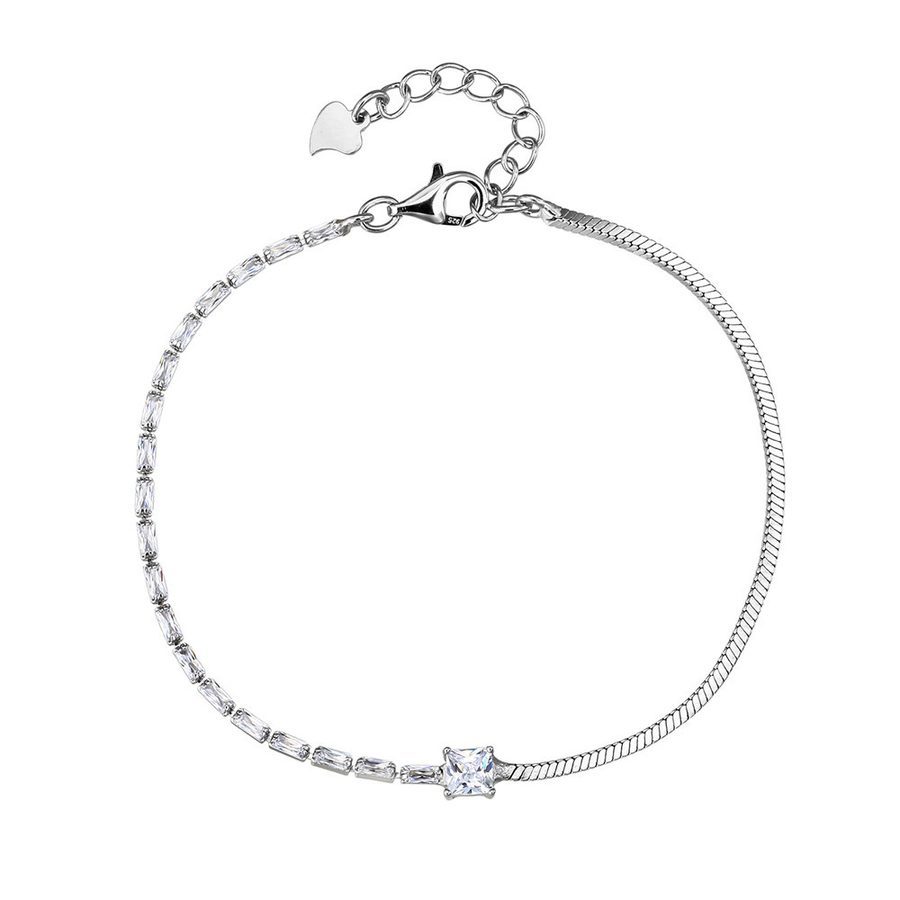
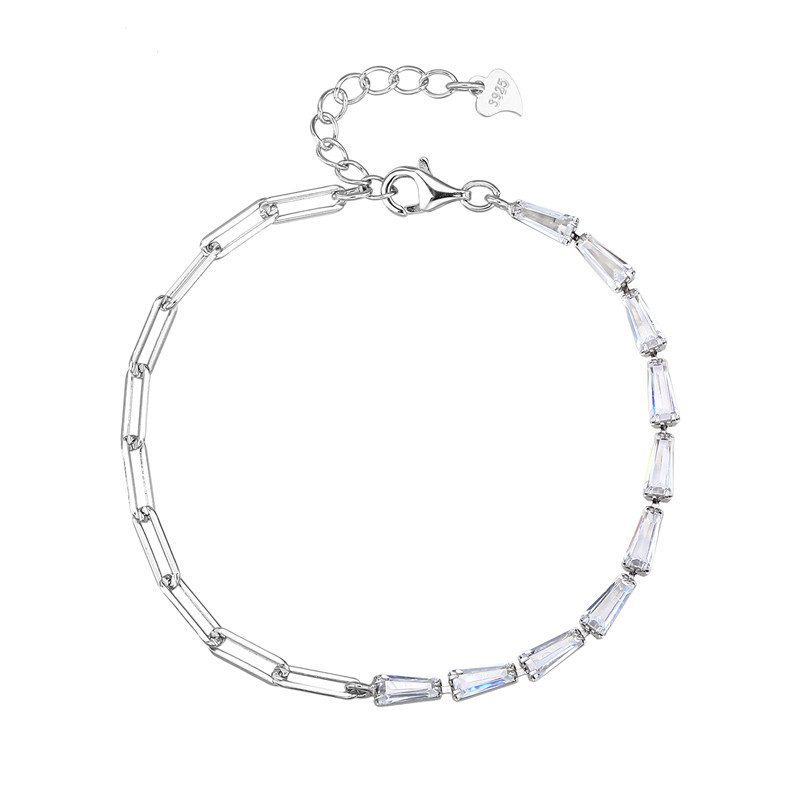
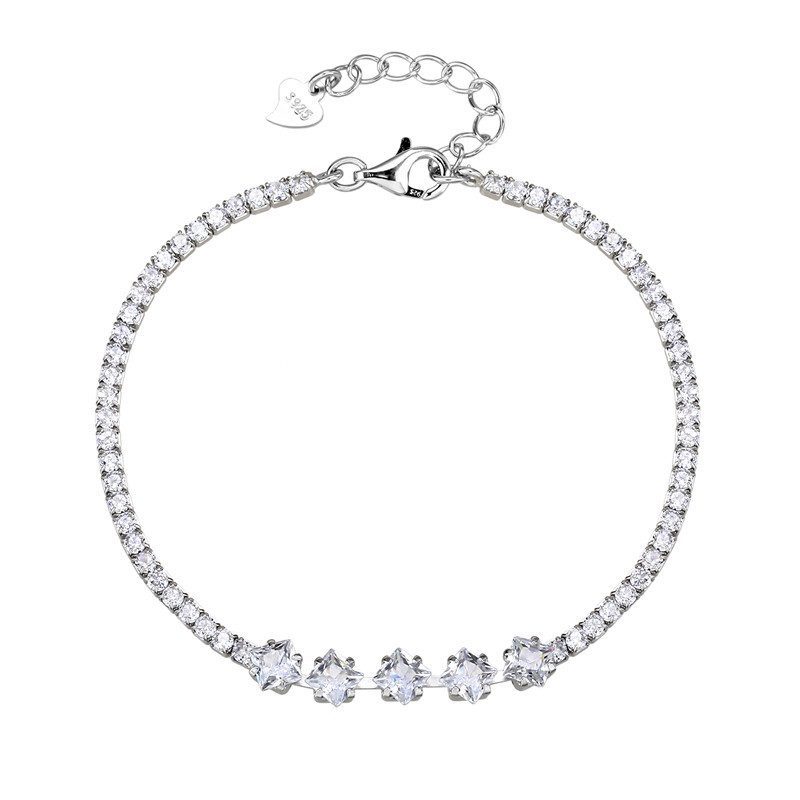
Explore selected 925 sterling silver tennis bracelet designs from the English Tennis Bracelets collection. Each product page includes more specifications and inquiry details for buyers.
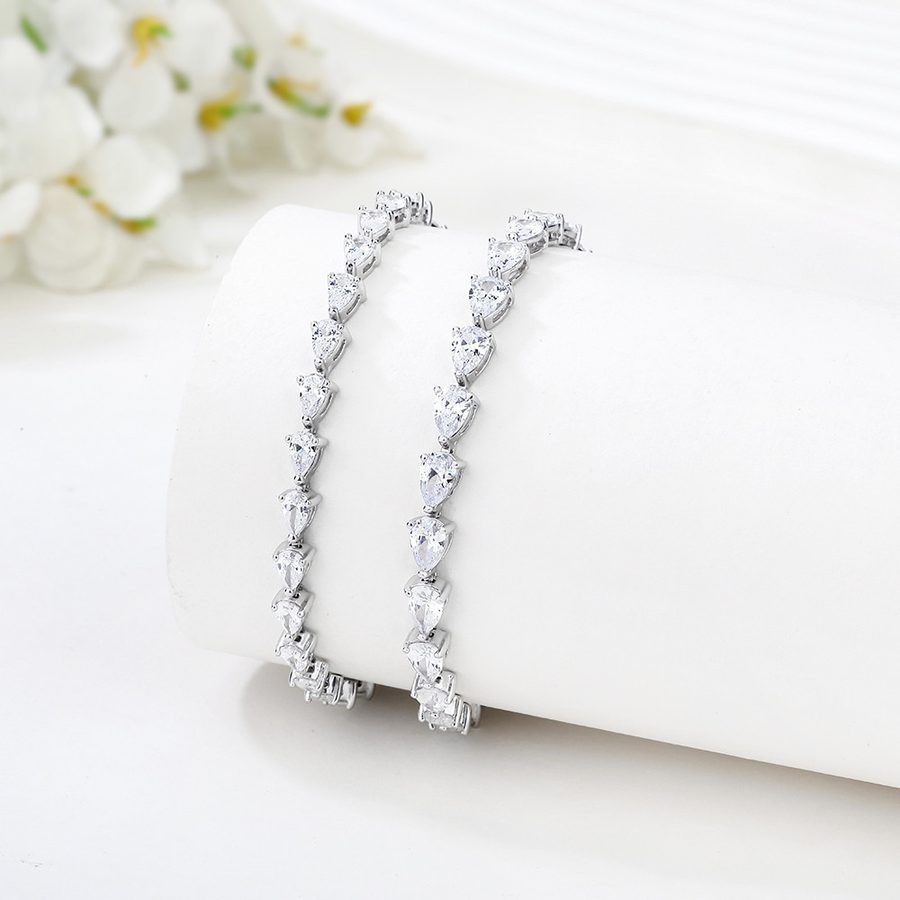
Add elegance to your collection with our Women's Silver Tennis Bracelet. Crafted for lasting beauty and style. Click to explore and get in touch for wholesale inquiries!
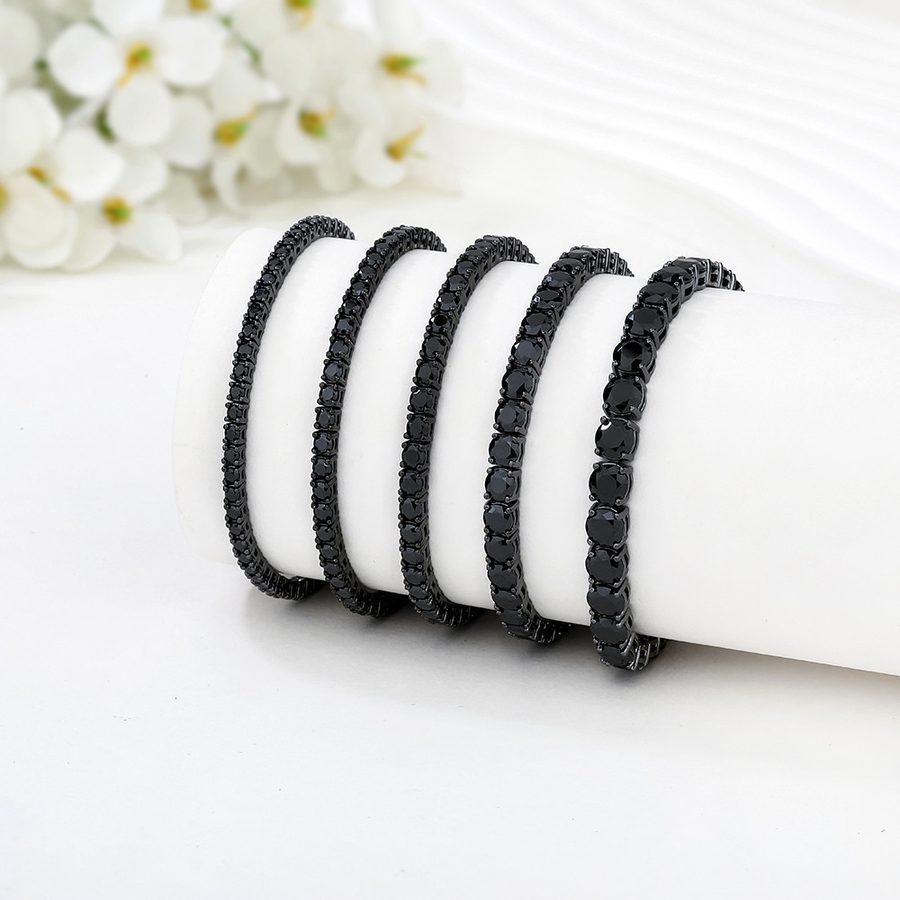
This bracelet features classic round black zircons, which are neatly arranged and each is evenly sized, making the bracelet look simple yet sophisticated.
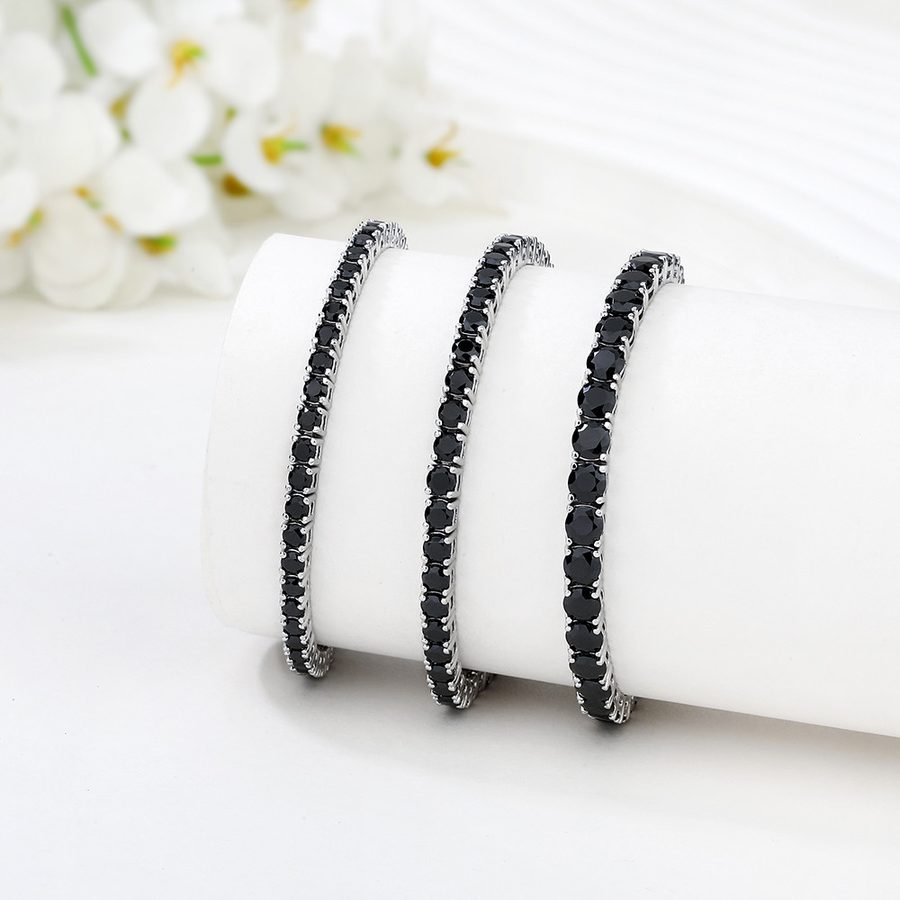
This black zircon tennis bracelet is exquisitely designed. The black zircon adds a sense of mystery and forms a strong visual contrast with the silver bracelet.
Background: aphrosilver has 15 years of silver jewelry design experience, has provided design services for multiple international brands, and focuses on combining traditional craftsmanship with modern aesthetics.