How to Choose a 925 Silver Tennis Bracelet Supplier: 7 Questions to Ask First
The Supplier You Choose Shapes Your Product
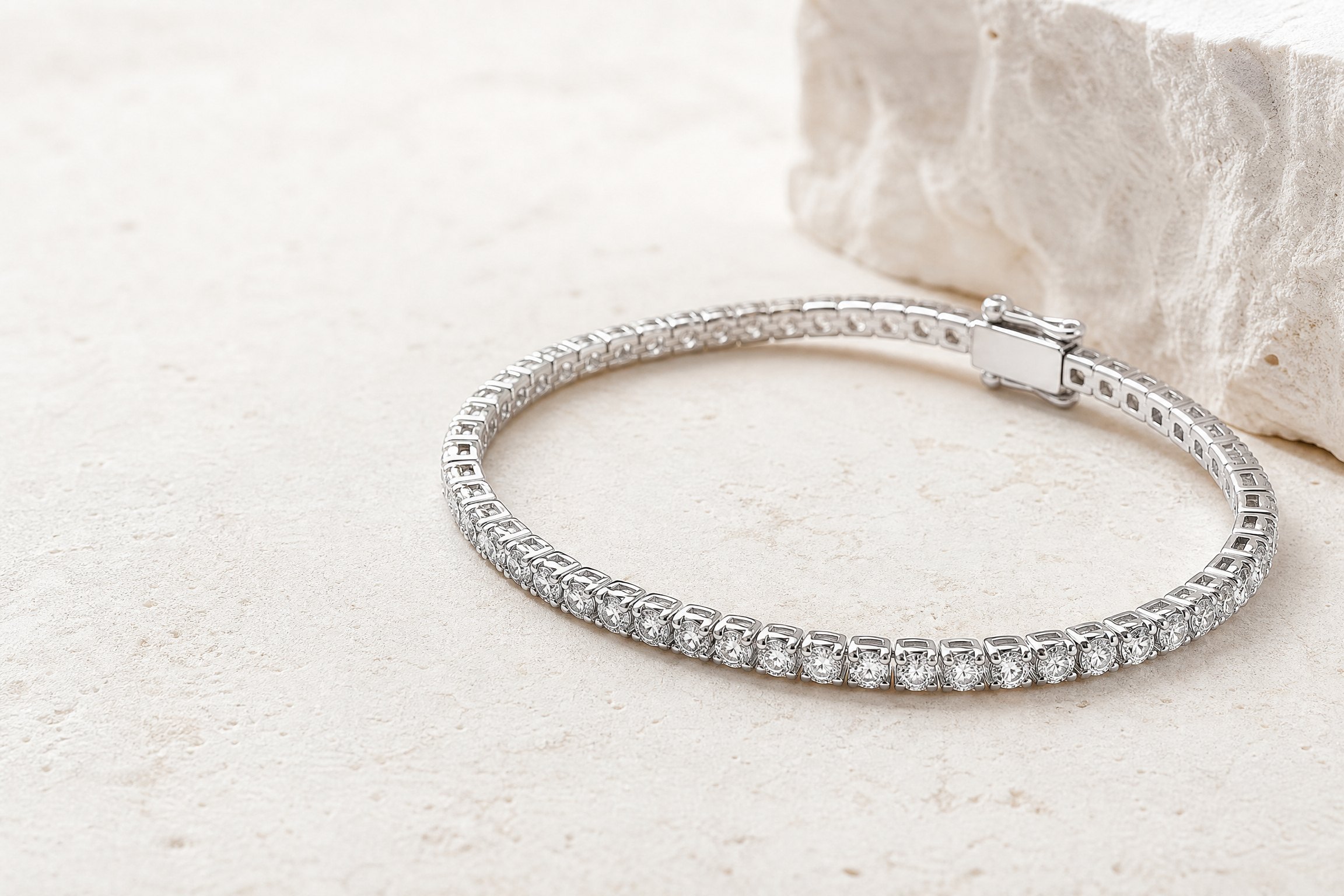
A tennis bracelet may look simple, but producing one consistently requires control over metal quality, stone setting, clasp performance, polishing, plating, packaging, and order communication. For brands, wholesalers, retailers, and private-label jewelry companies, choosing the right 925 silver tennis bracelet supplier is therefore a sourcing decision—not simply a price comparison.
A reliable supplier should help you answer practical questions before production begins: Is the bracelet made from genuine 925 sterling silver? Can the supplier follow your dimensions and stone specifications? Are samples representative of bulk production? Will the team protect your design files and meet your delivery window?
The word “925” generally indicates that 925 parts per thousand are pure silver, or 92.5% silver, while “sterling silver” is commonly used for products containing 92.5% pure silver. However, a stamp alone does not tell you whether a supplier has strong production controls. This guide explains the seven questions to ask before selecting a sterling silver tennis bracelet supplier, so you can compare suppliers on evidence, communication, and repeatability.
The best 925 silver tennis bracelet supplier is the one that can document material specifications, demonstrate stable craftsmanship, provide a clear customization process, communicate realistic lead times, and support your brand after the first order.
1. Is the Supplier a Manufacturer, a Trading Company, or Both?
The first question is not “What is your lowest price?” It is “Who controls the production process?” A 925 silver tennis bracelet manufacturer may operate its own workshops and inspection procedures, while a trading company may coordinate production through several third-party factories. Neither model is automatically unsuitable, but the difference affects communication, customization, quality control, and accountability.
A factory-led supplier can often provide more direct answers about metal preparation, casting, stone setting, polishing, plating, and final inspection. A sourcing company may offer a broader catalog and flexible access to different workshops. What matters is transparency: you should know who makes the product, who checks it, and who is responsible if the finished goods do not match the approved sample.
Ask the supplier to clarify the following points in writing:
| Question | Why it matters |
|---|---|
| Do you own or directly manage the production facility? | It helps you understand who controls quality and capacity. |
| Which processes are handled in-house? | In-house control may shorten feedback loops for custom work. |
| Who performs final inspection? | Responsibility should be clear before an order is placed. |
| Can you show relevant production or inspection evidence? | Evidence is more useful than broad claims about being “professional.” |
| Can you support private-label packaging and repeat orders? | Brand buyers need more than a one-time catalog transaction. |
For a standard stock design, a trading company may be sufficient. For a custom tennis bracelet, custom tennis chain, or coordinated collection, direct manufacturing access can reduce misunderstandings and make revisions more efficient.
2. What Proof Do You Provide for Silver Quality and Product Specifications?
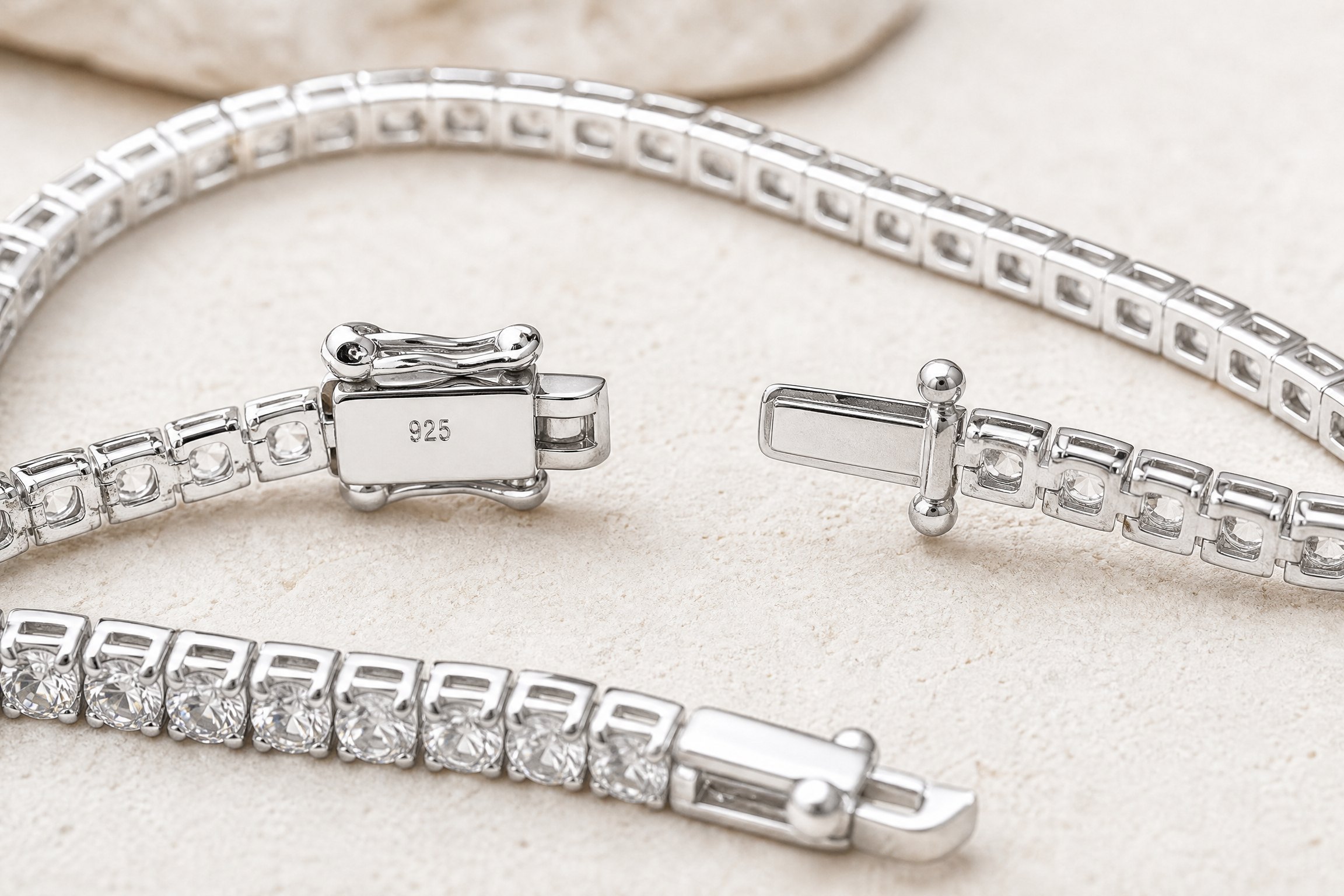
A professional silver tennis bracelet supplier should define exactly what “925 silver” means for the product you are buying. Ask for the material specification, product weight range, dimensions, stone type, plating details, clasp construction, and any applicable test or inspection documentation. You can also compare the supplier's range of 925 silver tennis bracelet designs before finalizing a brief.
The U.S. Federal Trade Commission explains that products described as “silver,” “sterling,” or “sterling silver” contain 92.5% pure silver, and that silver products are sometimes marked “925.”The relevant legal guidance also cautions businesses against misrepresenting a jewelry product’s metallic content, quality, size, durability, origin, or other material aspects. For international orders, the exact documentation and marking requirements may vary by market, so your supplier should help you verify the specifications used for your destination country.
Do not treat a certificate as a substitute for product inspection. Instead, connect every document to the specific item and production batch. A useful product specification sheet may include:
- Base material: 925 sterling silver, with any alloy or component disclosure required for your market.
- Finish: polished, rhodium-plated, gold-plated, vermeil, or another clearly defined treatment.
- Stone details: cubic zirconia, laboratory-grown stones, natural stones, or another agreed material, including size and setting method.
- Dimensions: bracelet length, width, thickness, clasp size, and extension-chain details.
- Tolerances: acceptable variation in weight, color, stone alignment, and dimensions.
- Packaging and marking: logo, 925 mark, hangtag, pouch, box, barcode, and carton requirements.
If a supplier avoids specific answers or changes terminology from one conversation to the next, consider that a sourcing risk. Clear specifications make quotations comparable and reduce disputes after production.
3. Can You Customize the Bracelet Beyond a Catalog Design?
Many brands searching for a customizable tennis bracelet supplier are not looking for a generic product with a logo added at the end. They may need a particular stone size, bracelet length, setting profile, clasp shape, plating color, engraving, packaging system, or matching tennis necklace.
Before requesting a quotation, ask the supplier to explain its customization workflow. A dependable process normally includes design-file review, feasibility feedback, quotation, prototype or pre-production sample, sample approval, bulk production, inspection, and shipment. The supplier should also tell you which changes affect tooling costs, minimum order quantity, unit price, or lead time.
A useful design brief should specify:
| Customization area | Details to confirm |
|---|---|
| Metal | 925 sterling silver and any required finish or plating color |
| Stones | Material, size, cut, color, quantity, and setting style |
| Construction | Link shape, flexibility, hinge movement, clasp, and safety chain |
| Dimensions | Length, width, thickness, and size tolerance |
| Branding | Logo placement, engraving, hallmarks, packaging, and inserts |
| Commercial terms | MOQ, sample fee, tooling fee, production lead time, and reorder terms |
For a new design, insist on approving a physical sample or a clearly documented pre-production standard before bulk manufacturing. Digital images can communicate appearance, but they may not reveal flexibility, clasp tension, edge comfort, or how the stones sit along the links.
At AphroSilver, you can position the conversation around the complete product brief rather than a single reference photo and review custom sterling silver jewelry development options alongside the bracelet requirements. That makes it easier to align the design, manufacturing, quality, and packaging teams before the order is confirmed.
4. What Are the Red Flags to Avoid When Vetting a Silver Tennis Bracelet Supplier?
The fastest way to compare suppliers is to look for evidence of risk management. A low quotation may become expensive if it leads to inconsistent color, loose stones, weak clasps, missed launch dates, or unclear responsibility for rework.
Be cautious when a supplier:
- Gives a price without confirming material, dimensions, stone specifications, or finish.
- Promises an unusually short lead time without asking about quantity or customization.
- Uses “925 silver” and “silver-plated” interchangeably.
- Refuses to provide a sample, specification sheet, or inspection standard.
- Cannot explain how stone alignment, clasp function, and surface defects are checked.
- Changes the quoted MOQ, price, or lead time without documenting the reason.
- Sends product photos that do not clearly show the actual construction or finish.
- Avoids discussing packaging, replacement procedures, after-sales service, or reorder support.
These warning signs do not automatically prove that a supplier is unreliable, but they indicate that you need more documentation before placing an order. The FTC’s jewelry guidance emphasizes that claims about material, quality, and other important product characteristics should not be misleading. For a brand buyer, the practical lesson is simple: ask for clear, product-specific information and keep the approved specifications with the purchase order.
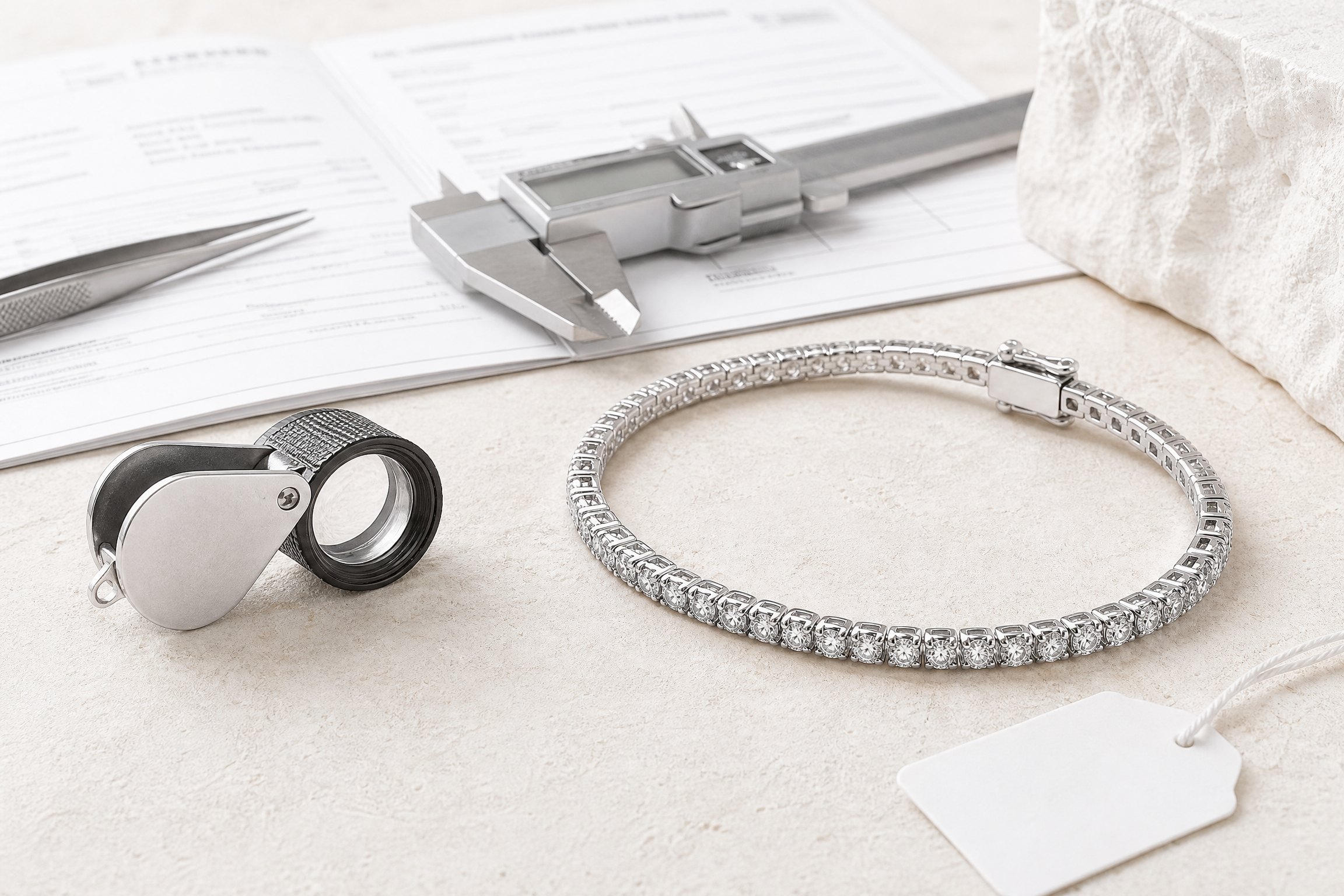
5. What Questions Should You Ask Before Ordering Sterling Silver Tennis Bracelets?
Before you choose a sterling silver tennis bracelet supplier, ask questions that reveal whether the supplier can support your commercial model. A retailer with a seasonal launch may prioritize lead-time control, while a private-label brand may prioritize design confidentiality, packaging, and repeatability.
Use the following checklist during supplier conversations:
| Topic | Question to ask |
|---|---|
| Material | What is the confirmed base metal and how is the 925 specification documented? |
| Sample | Is the sample made using the same materials and process planned for bulk production? |
| Quality | What defects are checked, and what acceptance standard applies to the order? |
| Stones | How are stone size, alignment, security, and replacement handled? |
| Clasp | How is clasp function tested before packing? |
| Customization | Can you modify dimensions, setting, finish, engraving, and packaging? |
| MOQ | What is the MOQ for stock, customized, and private-label orders? |
| Timing | What are the sample, production, inspection, and shipping lead times? |
| Reorders | Can you maintain the approved standard for repeat orders? |
| Service | Who is the account contact, and how are quality issues resolved? |
The strongest supplier responses are specific, consistent, and supported by examples. You should be able to convert the answers into a written product specification and order approval process. If you cannot, the supplier may not be ready for a long-term business relationship.
6. How Does a Trusted Tennis Necklace Bracelet Supplier Build Long-Term Partnerships?
A trusted tennis bracelet supplier understands that jewelry brands manage collections, launches, inventory, customer reviews, and cash flow—not just individual purchase orders. Long-term partnership therefore depends on operational consistency as much as product appearance.
A capable supplier supports the full cycle of a product program. For buyers planning a broader 925 Silver Tennis Jewelry collection, this repeatable process matters across coordinated products. The team reviews designs before sampling, identifies manufacturing risks early, keeps approved samples and specifications organized, communicates production milestones, performs documented inspections, and retains the information needed for future reorders. When a change is necessary, the supplier explains its impact instead of quietly substituting materials or processes.
Long-term partnership is also built through communication discipline. A practical supplier should provide one accountable contact, confirm decisions in writing, distinguish confirmed dates from estimates, and notify you promptly when a risk emerges. This is especially important when a sterling silver tennis chain supplier is coordinating custom tennis chains and bracelets, where a small change in link dimensions or clasp construction can affect both appearance and cost.
For buyers comparing a sterling silver tennis chain supplier, geographic location should not be the only selection criterion. Evaluate production transparency, sample accuracy, quality documentation, export experience, communication, and the supplier’s ability to repeat an approved product standard. A China-based partner can be valuable when its processes are clear and its service matches your requirements.
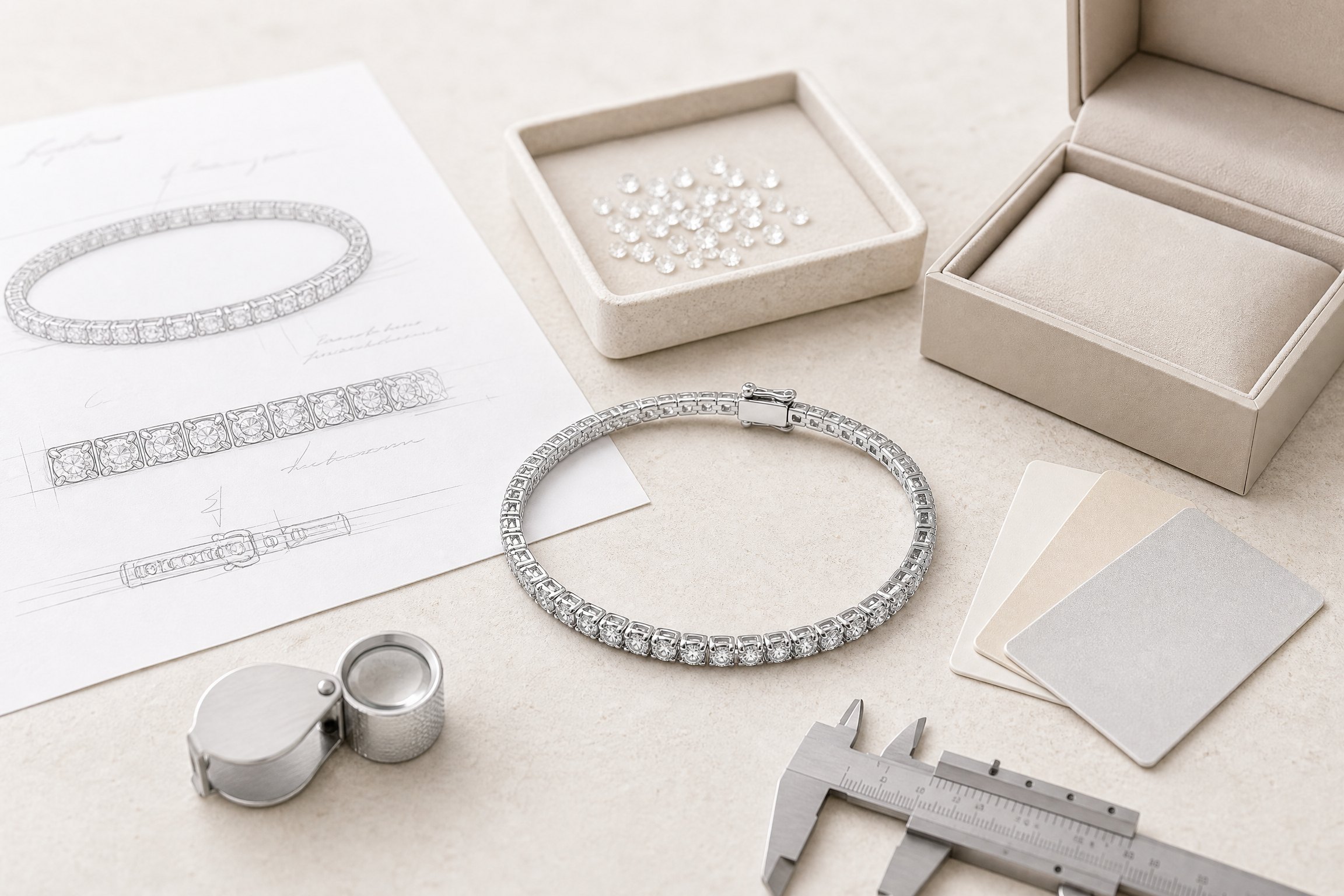
7. Why AphroSilver Is the Custom Tennis Bracelet Supplier Brands Rely On
AphroSilver is positioned for brands that want more than a catalog link and a one-time shipment. As a customizable tennis bracelet supplier, AphroSilver can help buyers organize the product brief around the details that affect appearance, wearability, production, and brand presentation.
The partnership begins with product clarity. Share your target market, reference design, desired dimensions, stone requirements, metal finish, branding needs, packaging expectations, quantity, and launch schedule. The AphroSilver team can then help translate those requirements into a more practical development path, identify details that need confirmation, and coordinate the sample stage before bulk production.
AphroSilver’s value for brand buyers can be communicated through five service principles:
- Specification-first development. Material, dimensions, finish, stones, clasp, logo, packaging, and tolerances are discussed before the quotation is finalized.
- Custom design support. The team can work from reference images, drawings, or a product concept and clarify which details are technically feasible.
- Sample-led approval. Buyers have a defined opportunity to review the product standard before committing to bulk production.
- Brand-ready execution. Custom packaging, private-label details, and coordinated jewelry collections can be planned as part of the project rather than added at the last minute.
- Reorder-oriented communication. Approved specifications and decisions should support future replenishment and collection expansion.
Whether you are sourcing one signature bracelet, building a matching tennis necklace and bracelet set, or developing a broader sterling silver jewelry collection, the right supplier should make the process more predictable. AphroSilver can be introduced as the partner that connects design intent with production execution, helping brands move from an idea to a repeatable jewelry product.
Frequently Asked Questions About 925 Silver Tennis Bracelet Suppliers
What does 925 mean on a tennis bracelet?
“925” generally means that 925 parts per thousand of the material are pure silver, equivalent to 92.5% silver. The product specification, marking requirements, and supporting documentation should still be confirmed with the supplier for the destination market.
Is a 925 silver tennis bracelet the same as a sterling silver tennis bracelet?
In common jewelry terminology, 925 silver and sterling silver refer to silver containing 92.5% pure silver. However, buyers should still verify the actual material, finish, plating, stones, clasp, and product documentation rather than relying only on the product name.1
How do I choose a reliable silver tennis bracelet supplier?
Compare suppliers using evidence: clear material specifications, representative samples, documented quality checks, realistic MOQ and lead times, customization capability, transparent communication, and a defined process for resolving defects or reorders.
Can a supplier customize a tennis bracelet for my brand?
Many suppliers can customize dimensions, stones, setting style, plating, engraving, clasp design, packaging, and private-label details. Ask for the supplier’s complete workflow, including design review, sampling, approval, production, inspection, and reorder support.
What is the difference between a supplier and a manufacturer?
A manufacturer typically produces goods through its own facility or directly managed production resources. A supplier may manufacture products, coordinate third-party factories, or do both. The important issue is whether the supplier clearly explains who makes, inspects, and supports your product.
What information should I include in a quotation request?
Include reference images or drawings, metal specification, bracelet length and dimensions, stone material and size, setting style, finish, logo and packaging requirements, estimated quantity, target delivery date, destination market, and whether you need a sample before bulk production.
Contact AphroSilver About Your Custom Tennis Bracelet Project
Choosing a supplier is easier when the first conversation is based on a complete product brief. If you are comparing 925 silver tennis bracelet suppliers, developing a private-label collection, or looking for a sterling silver tennis chain supplier, send AphroSilver your design references and requirements.
Tell us what you need, including the bracelet style, silver specification, stone details, dimensions, finish, logo or packaging requirements, estimated quantity, and target timeline. AphroSilver will help you identify the next practical step, whether that is a product consultation, quotation, sample development, or collection discussion.
Ready to develop your next signature jewelry piece? Contact AphroSilver today for custom 925 silver tennis bracelets, tennis necklaces, and brand-ready jewelry solutions.
Contact AphroSilver for a Custom Quote
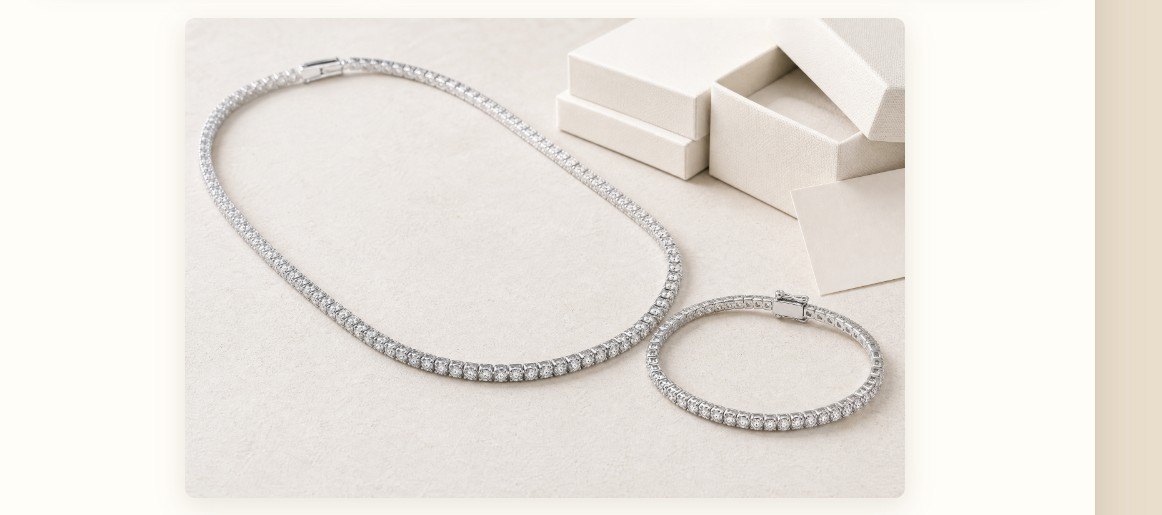
Product Recommendations
Explore related tennis jewelry collections from AphroSilver, including representative products for wholesale, private-label, and custom jewelry programs.
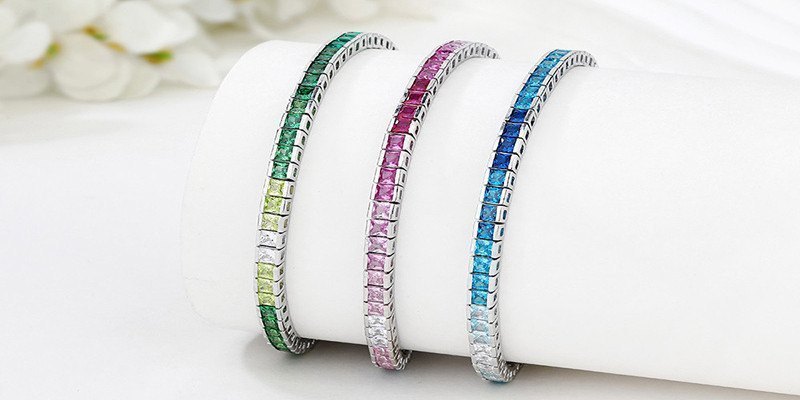
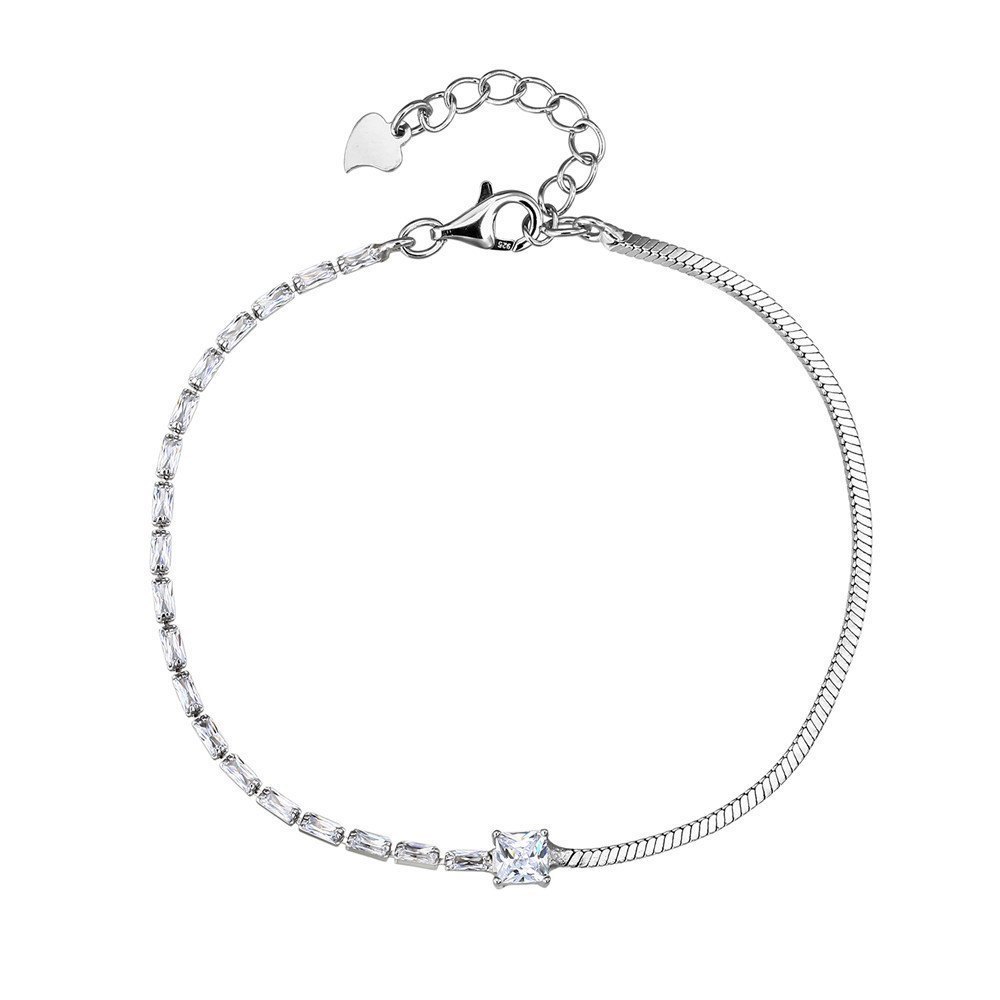
Featured product
Elegant Silver Zircon Tennis Bracelet | 925 Sterling Silver Adjustable Chain for Women
View Tennis Bracelets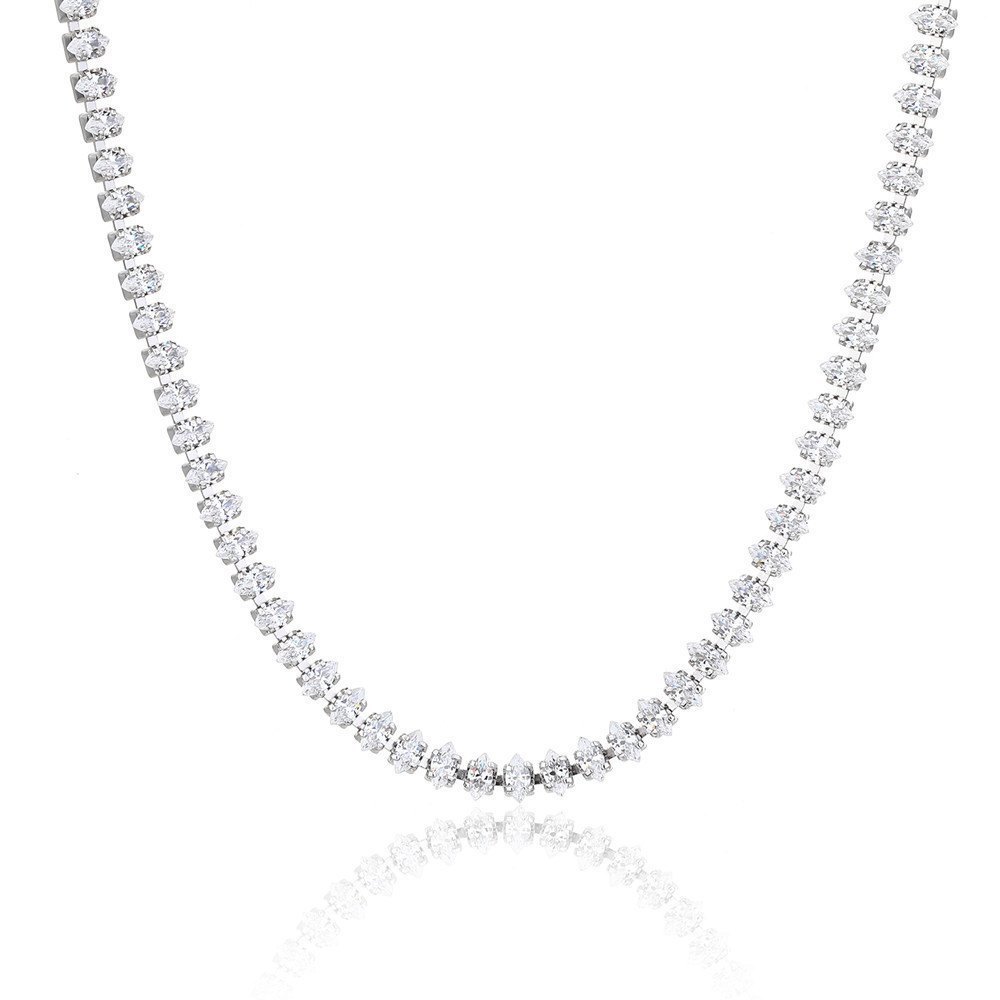
Featured product
Classic Silver Zircon Tennis Necklace Wholesale | High-Quality Women's Fashion Jewelry
View Tennis Necklaces