Tennis Bracelet Manufacturers in China: Why Global Brands Source Here
Aug 24,2026
Why do global brands source tennis bracelets from China?
Global jewelry brands source tennis bracelets from China because the country combines a mature jewelry supply chain, flexible OEM and ODM production, extensive finishing capabilities, and access to specialized manufacturing clusters. For a buyer, the advantage is not simply a lower unit price. It is the ability to coordinate silver materials, stone setting, polishing, plating, packaging, quality inspection, and export preparation through one organized supply network.
The right supplier still matters. A low quotation without clear specifications, sample approval, inspection standards, or delivery controls can create more cost than it saves. This guide explains how to evaluate tennis bracelet manufacturers in China, what to compare with US and European makers, and how AphroSilver can support a more controlled sourcing process.
Buyer takeaway: China can be a strong sourcing base for tennis bracelets when the manufacturer can demonstrate consistent craftsmanship, transparent communication, documented quality controls, and reliable export execution.
Why China leads in tennis bracelet manufacturing
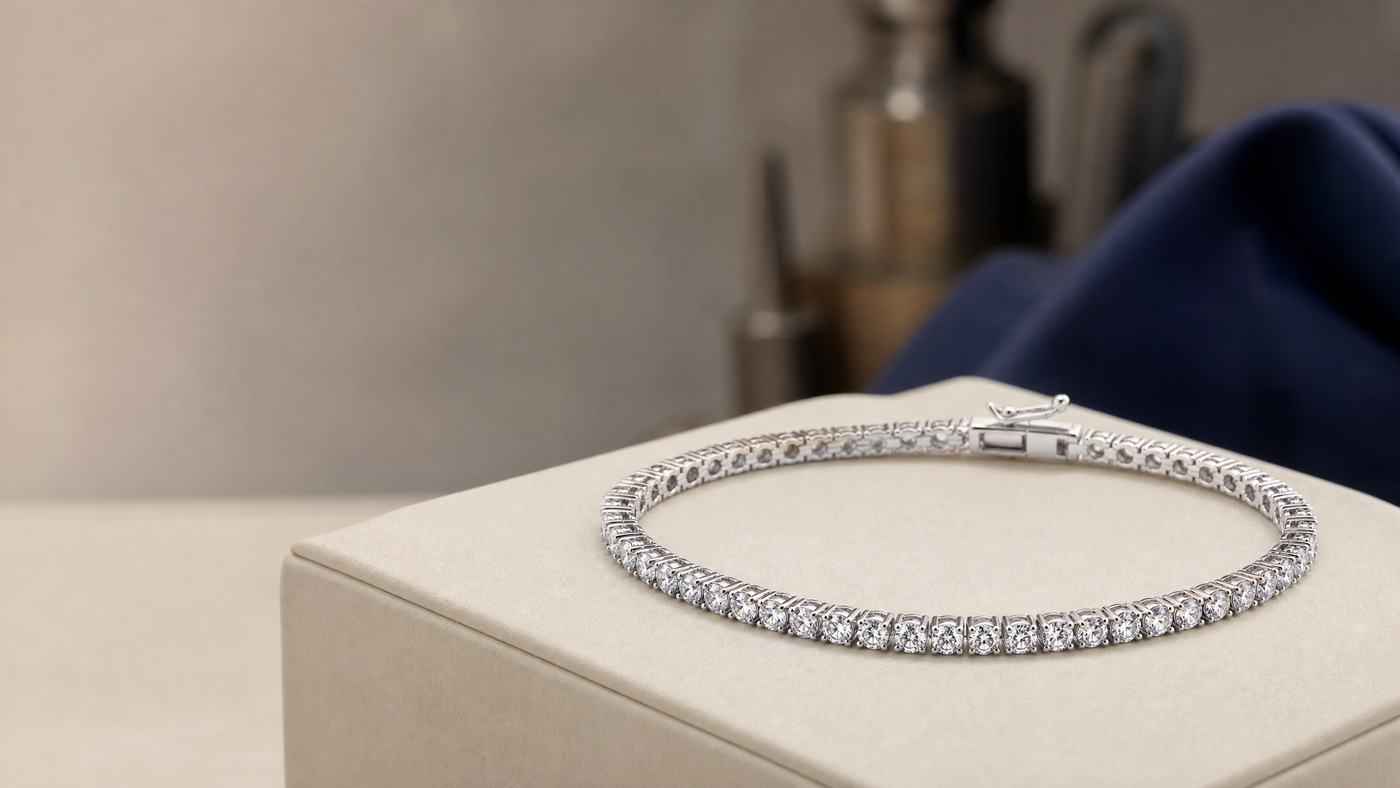
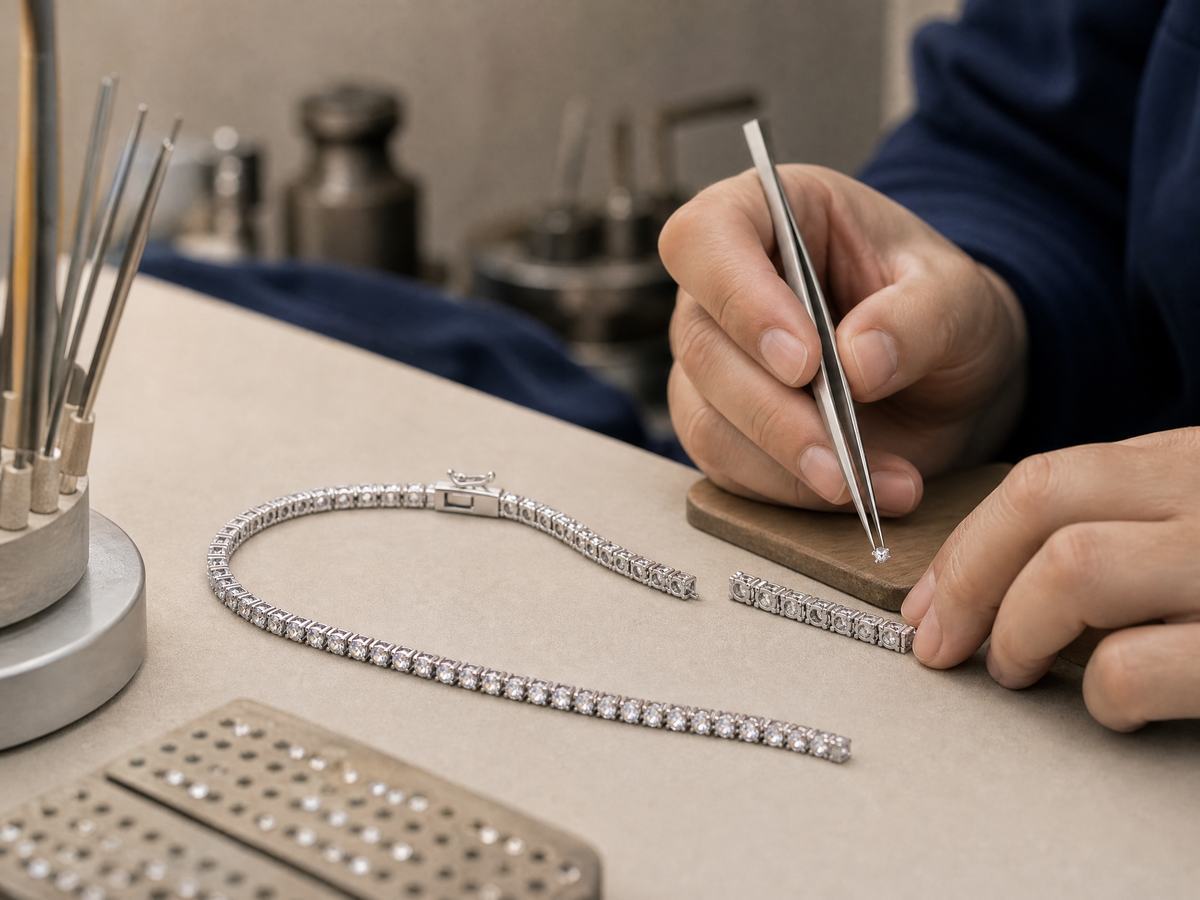
A tennis bracelet looks visually simple, but it requires repeatable precision across many small components. Every stone must sit securely and align with the next setting. The links must move smoothly without creating visible gaps. The clasp must balance security, comfort, and appearance. Surface finishing must remain even across the bracelet, including areas that are difficult to inspect after assembly.
China’s competitive strength comes from the density of suppliers and supporting services involved in this process. A buyer may be able to source sterling silver, chains, findings, casting, CNC or stamping support, stone setting, polishing, plating, packaging, and inspection through connected vendors in the same regional ecosystem. This shortens coordination time and makes it easier to develop a product from a drawing or reference sample.
The manufacturing advantages that matter to buyers
Manufacturing factor
Why it matters for a tennis bracelet
What a buyer should verify
Material control
Silver purity, alloy consistency, and plating influence appearance, durability, and compliance
Material specification, 925 marking requirements, plating thickness or finish standard, and test documentation
Stone-setting capability
Small alignment or prong errors are highly visible in a linear tennis design
Setting method, sample inspection process, stone tolerance, and handling of loose or damaged stones
Flexible customization
Brands often need proprietary lengths, finishes, logos, packaging, or stone grades
OEM/ODM workflow, CAD or sample development, MOQ, revision policy, and tooling ownership
Finishing and plating
A smooth, consistent surface supports the brand’s perceived value
Polishing stages, plating options, color references, and batch-to-batch comparison
Supply-chain coordination
Multiple vendors can increase delays and communication risk if not managed centrally
Named project contact, production schedule, inspection checkpoints, and escalation process
Export readiness
Incorrect documents or packaging can delay delivery
The best Chinese jewelry manufacturers do not treat these points as afterthoughts. They turn them into a documented workflow that can be reviewed before mass production begins.
Key manufacturing clusters for silver jewelry manufacturers in China
China is not a single sourcing location. Different regions and cities offer different combinations of design, materials, manufacturing, trading, and logistics support. A sourcing plan should therefore begin with the product requirements and then identify the most suitable production ecosystem.
Shenzhen Shuibei: strong jewelry trading and supplier networks
Shenzhen is widely recognized as a major center of China’s gem and jewelry industry. A field report from the Gemological Institute of America describes Shenzhen as a major jewelry manufacturing and trading hub and identifies Shuibei Jewelry Park as a concentrated center for jewelry businesses and related services.
For buyers, the practical value of the Shenzhen ecosystem is supplier access. Jewelry companies, trading centers, testing laboratories, packaging services, storage providers, and logistics resources can be found within a highly connected commercial environment. This can be useful when a brand needs quick sample development, multiple product references, or a coordinated sourcing visit.
Shenzhen is particularly relevant when a project involves custom design, silver jewelry development, trend-sensitive collections, or communication with several potential suppliers before final selection. However, a trading location is not automatically the same as a factory. Buyers should confirm whether a supplier owns its production capacity, manages partner factories, or operates primarily as a sourcing intermediary.
Other regional ecosystems
Other areas of China may be suitable depending on the product category, order scale, material requirements, and delivery plan. Some suppliers are optimized for fashion jewelry and small-batch customization; others are stronger in high-volume production, casting, chain manufacturing, or precious-metal processing. The key is to evaluate the actual workshop and production process connected to your order rather than choosing a location based only on reputation.
Buyer requirement
Useful sourcing question
Small-batch launch
Can the supplier develop samples and support a realistic first order without compromising consistency?
Large repeat order
What is the monthly capacity for the exact bracelet construction and stone specification?
Custom design
Who owns the CAD files, molds, samples, and approved production specifications?
Compliance-sensitive market
Which test reports, declarations, and material records can be provided for the destination market?
Multi-SKU collection
Can one account manager coordinate several styles, finishes, and packaging configurations?
When comparing silver jewelry manufacturers in China, ask for evidence connected to your project: recent sample photos, inspection records, material documentation, and a clear explanation of how production is controlled.
Cost advantage: China silver jewelry factory vs. US and European makers
The cost difference between a China silver jewelry factory and a US or European maker should be evaluated as a total landed-cost question, not as a simple factory-price comparison. Labor, tooling, raw materials, stone sourcing, finishing, packaging, freight, duties, inspection, and rework can all affect the final cost per sellable unit.
China may offer an advantage when the project benefits from an established supplier network, repeatable production, and flexible customization. US and European manufacturers may offer advantages in proximity, local communication, shorter domestic transit, or brand positioning. The right choice depends on the product, order volume, target market, required lead time, and level of hands-on oversight.
Cost category
China-based production
US or European production
Buyer’s evaluation point
Development
Often flexible for OEM sampling and supplier-supported customization
May offer convenient local iteration
Compare sample quality and revision speed, not only sample price
Labor and assembly
Can be competitive where the supply chain is specialized
May carry higher labor costs in some markets
Confirm workmanship and process control at the target quality level
Materials and components
Broad access to silver findings, stones, plating, packaging, and related vendors
May reduce import coordination for local brands
Compare like-for-like specifications and certification needs
Freight and import
Requires international shipping, customs planning, and destination compliance
May reduce cross-border logistics
Calculate landed cost and delivery risk
Rework and claims
Distance can make correction more complex
Local resolution may be easier
Review inspection, approval, and replacement policies
Minimum order quantity
Some suppliers support flexible custom programs; policies vary
May suit smaller local runs; policies vary
Request the actual MOQ for your design and finish
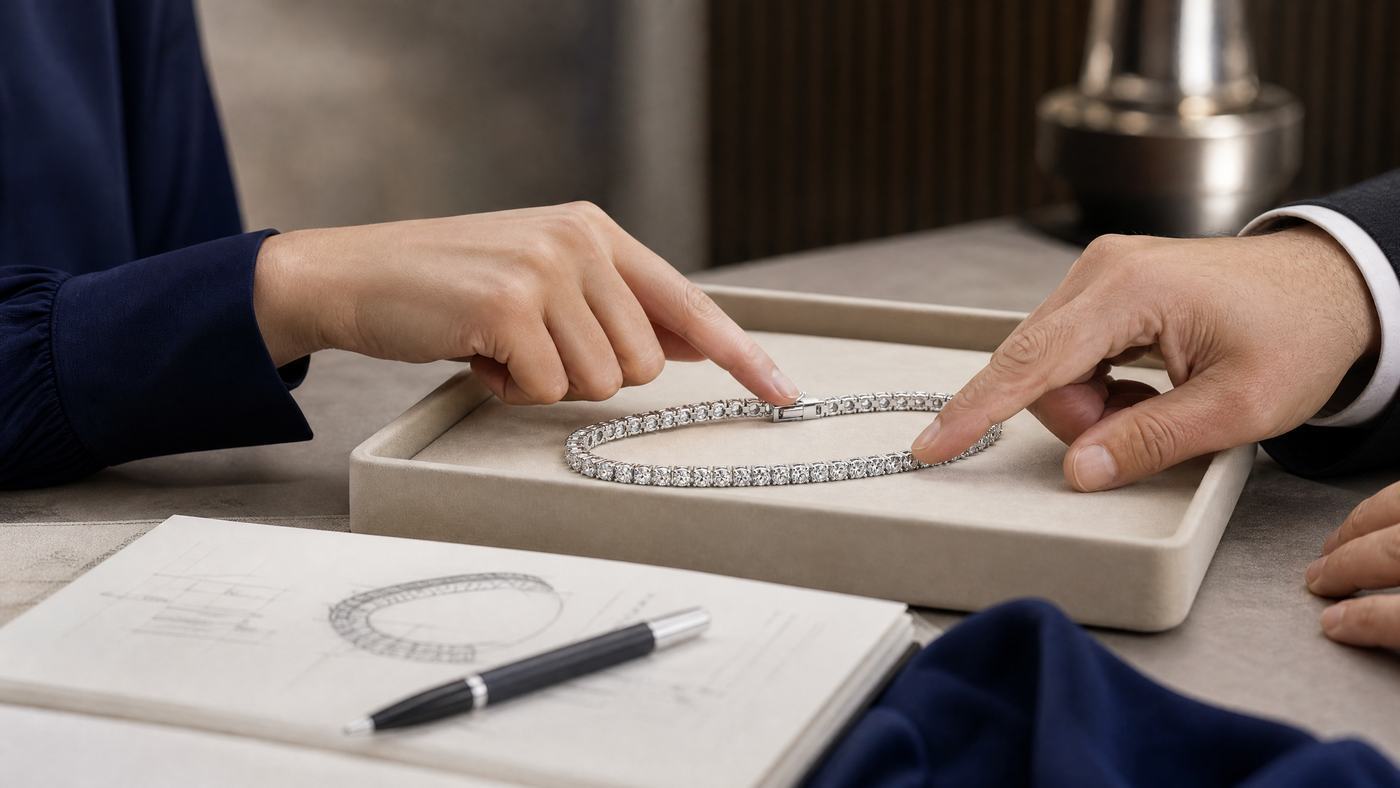
A useful request-for-quotation package should include bracelet length, width, silver standard, stone type and size, setting style, plating or finish, clasp requirements, logo placement, packaging, quantity, destination, and target delivery date. Without these details, quotations from different tennis bracelet manufacturers china may not be comparable.
AphroSilver can help buyers turn a product idea into a clearer specification before quotation. This reduces the risk of comparing one supplier’s basic sample with another supplier’s fully specified product.
How to evaluate tennis bracelet manufacturers in China
A professional supplier evaluation should move from capability to evidence to controlled production. The following process is suitable for a brand that is searching for a tennis bracelet manufacturer China partner for a new collection or a repeat program.
1. Start with a complete product brief
Describe the commercial purpose of the bracelet as well as its technical requirements. Include the intended customer, target price range, sales channel, expected order volume, required margin, and launch date. Then define the product itself: dimensions, material, stones, setting, finish, clasp, logo, packaging, and labeling.
A clear brief helps the manufacturer identify constraints early. It also gives you a consistent document for comparing quotations from different china jewelry manufacturers.
2. Request evidence of relevant experience
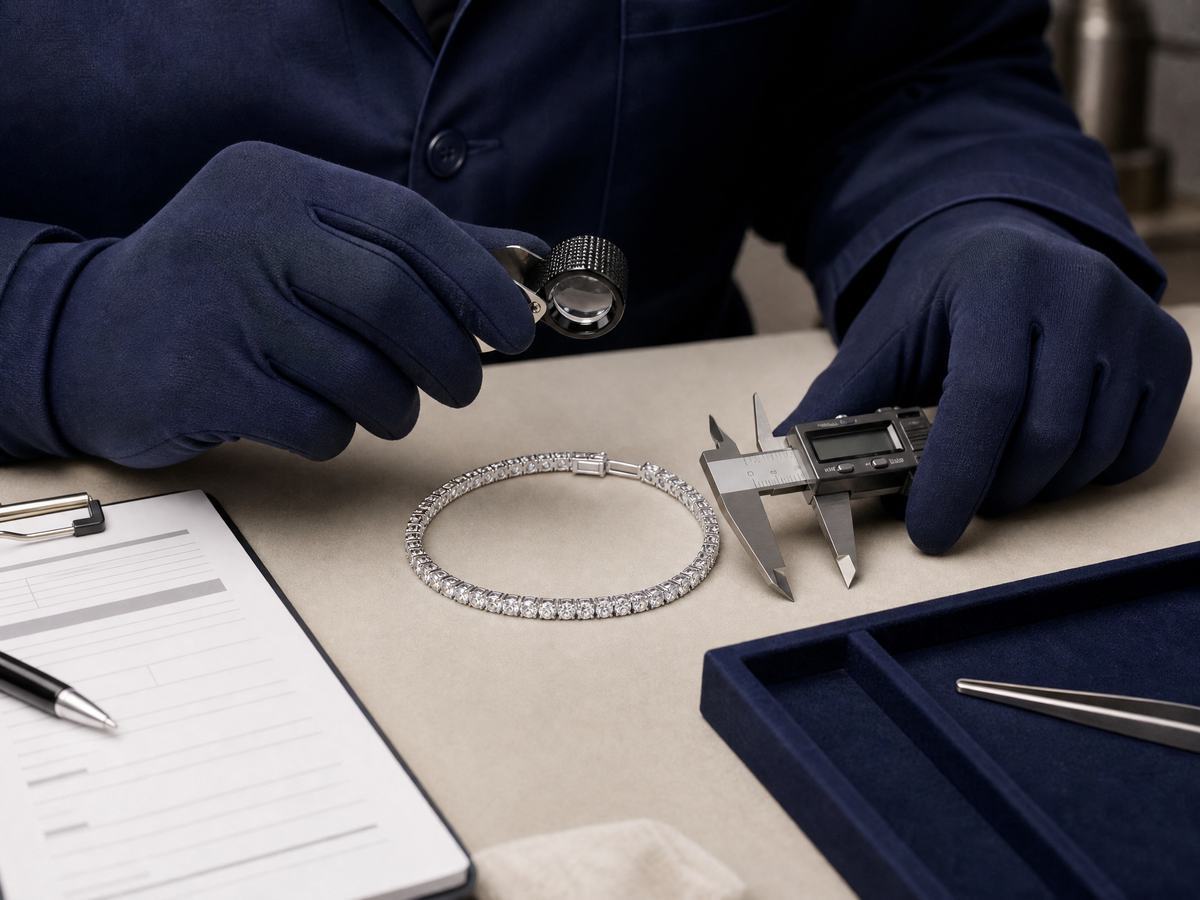
Ask for examples of comparable tennis bracelets or linear stone-set jewelry. Product photos are useful, but they are not enough by themselves. Ask how the supplier checks stone alignment, clasp function, surface finish, plating, dimensions, and weight. If the supplier cannot explain the inspection method, the product photos provide limited evidence.
3. Approve a controlled sample
The approved sample should become the reference standard for mass production. Record the measurements, material, stone specifications, finish, logo details, packaging, and acceptable tolerances. If there are revisions, keep a dated version history so the factory and buyer are working from the same specification.
4. Confirm production and inspection checkpoints
Do not wait until shipment to identify quality issues. Define checkpoints for material preparation, setting, polishing, plating, assembly, final inspection, and packing. For repeat orders, compare the current production against the approved sample and the previous accepted batch.
5. Review export and communication capability
A supplier’s ability to produce a bracelet is only one part of the sourcing decision. The partner should also communicate clearly about capacity, lead time, changes, delays, packaging, shipping documents, and corrective actions. A reliable project contact can be as important as a competitive unit price.
Risks to manage with tennis bracelet manufacturers in China
China sourcing can be commercially attractive, but buyers should manage the risks deliberately. The common problem is not that a supplier is located in China; it is that the buyer begins production without a sufficiently specific agreement about the product, process, and evidence.
Language and specification risk
A translation gap can change the meaning of stone size, plating color, clasp type, tolerances, or packaging details. Use drawings, measurement tables, reference photos, approved samples, and written change confirmations. Avoid relying on a product name alone, because “silver tennis bracelet” can describe several different constructions.
Factory verification risk
A supplier may present a showroom, office, trading company, or partner workshop. Ask who will manufacture the order, where each major process will take place, and who is responsible for final inspection. A video call or factory visit can be useful, but it should be supported by documents and sample evidence.
Quality consistency risk
Tennis bracelets make inconsistency easy to see. Differences in stone alignment, link movement, plating tone, clasp tension, or bracelet length can affect customer satisfaction. Define measurable acceptance criteria before production and consider pre-shipment inspection for larger or strategically important orders.
Intellectual-property risk
A custom design should be treated as a commercial asset. Keep dated design files, clarify ownership of CAD files and molds, restrict the use of logos and packaging artwork, and avoid sending confidential files to suppliers before the project relationship and documentation are appropriate. For destination-specific legal protection, obtain advice from a qualified professional.
Delivery and change-management risk
Late material arrival, approval delays, design revisions, and rework can move a launch date. A written production schedule should identify dependencies, approval deadlines, inspection dates, and the process for handling changes. Buyers should also clarify what happens if the delivered goods fail the agreed standard.
How AphroSilver stands out among China silver jewelry manufacturers
AphroSilver is positioned for buyers who need more than a product catalog. The value of a sourcing partner is the ability to connect design intent with an executable manufacturing specification, then maintain control from sample approval to export.
For a tennis bracelet project, AphroSilver can support the buyer conversation around product structure, 925 silver requirements, stone-setting details, finishing options, branding, OEM development, packaging, and delivery coordination. The goal is to make the order understandable to both sides before production begins.
A practical AphroSilver sourcing workflow
Stage
AphroSilver focus
Buyer output
Brief review
Clarify design, market, quantity, finish, packaging, and target timeline
Confirmed product requirements
Product development
Coordinate sample or custom development and resolve technical questions
Reviewable prototype or sample
Approval
Record the approved specifications and changes
Production reference standard
Manufacturing
Coordinate progress and communicate material or schedule issues
Visibility into order status
Quality control
Check the agreed product characteristics before shipment
More predictable sellable units
Export preparation
Align packing, documents, and shipping information
Smoother handover to logistics
FAQ: sourcing tennis bracelet manufacturers in China
What should I ask a tennis bracelet manufacturer before placing an order?
Ask about relevant product experience, material specifications, stone-setting methods, sample development, MOQ, production capacity, inspection standards, lead time, packaging, export documents, and the process for handling defects or changes. The answers should be specific to your design rather than copied from a general supplier profile.
Is 925 silver suitable for a tennis bracelet?
925 silver, also called sterling silver, is a common material choice for jewelry because it contains 92.5% silver by weight, with the remaining portion typically made up of other metals to improve strength. The exact alloy, markings, plating, testing, and destination-market requirements should be confirmed in the product specification and compliance documents. Buyers also use the phrase 925 china tennis bracelet when searching for this product category.
What is the difference between a tennis bracelet and a tennis necklace?
A tennis bracelet is worn around the wrist, while a tennis necklace is designed for the neck. Both may use a continuous line of stones, but their dimensions, flexibility, clasp requirements, wear conditions, and construction need to be evaluated separately. This distinction is important when searching for a tennis necklace manufacturer China supplier, because a factory experienced in bracelets may still need a separate specification for necklace development.
Can a China silver jewelry factory support private-label or OEM orders?
Many suppliers offer OEM, ODM, or private-label services, but the scope differs. Confirm whether the supplier can work from your drawing or reference sample, develop CAD files, create tooling, apply your logo, produce custom packaging, meet your MOQ, and protect your design information. AphroSilver can discuss these requirements before recommending a suitable production route.
How can I compare Chinese jewelry manufacturers fairly?
Send the same technical brief to each candidate and compare like-for-like quotations. Review total landed cost, sample quality, tolerances, material evidence, inspection process, communication, lead time, packaging, and after-sales handling. A lower unit price is not a meaningful advantage if the product requires extensive rework or arrives too late for launch.
What does “tennis bracelet manufacturers china” mean as a search term?
It generally refers to buyers looking for China-based suppliers that can produce tennis bracelets, often for wholesale, private label, OEM, or custom jewelry programs. The phrase can include factories, integrated manufacturers, and sourcing partners, so buyers should verify the supplier’s actual role before placing an order.
Contact AphroSilver about your tennis bracelet project
If you are comparing tennis bracelet manufacturers in China, preparing a 925 silver collection, or looking for a custom jewelry manufacturer China partner, send AphroSilver your product brief. Include the design reference, bracelet length and width, material, stone details, finish, quantity, packaging needs, destination market, and target delivery date.
AphroSilver can then help you identify the key manufacturing questions, clarify the specification, and discuss the next step for sampling, OEM development, quality control, and export coordination.
Background: aphrosilver has 15 years of silver jewelry design experience, has provided design services for multiple international brands, and focuses on combining traditional craftsmanship with modern aesthetics.

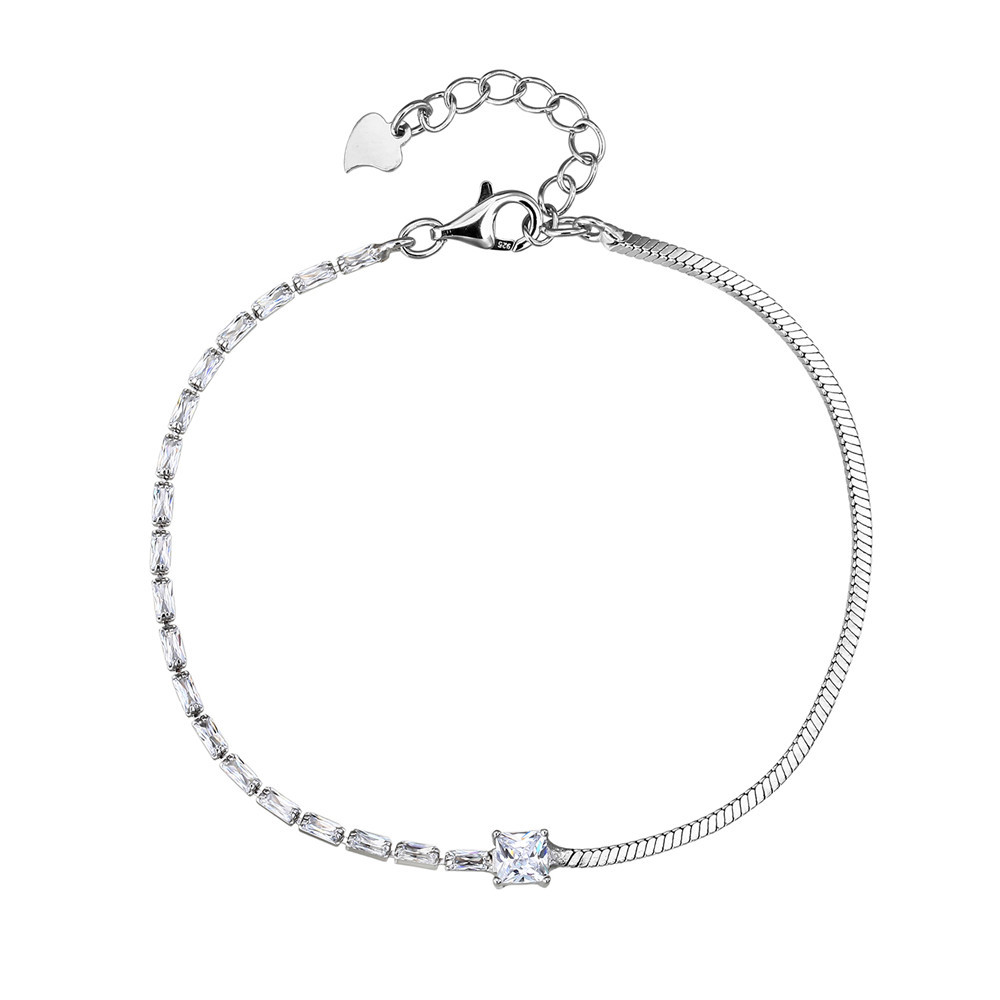 Tennis JewelryExplore the complete Tennis Jewelry collection for coordinated wholesale and private-label programs.View Tennis Jewelry →
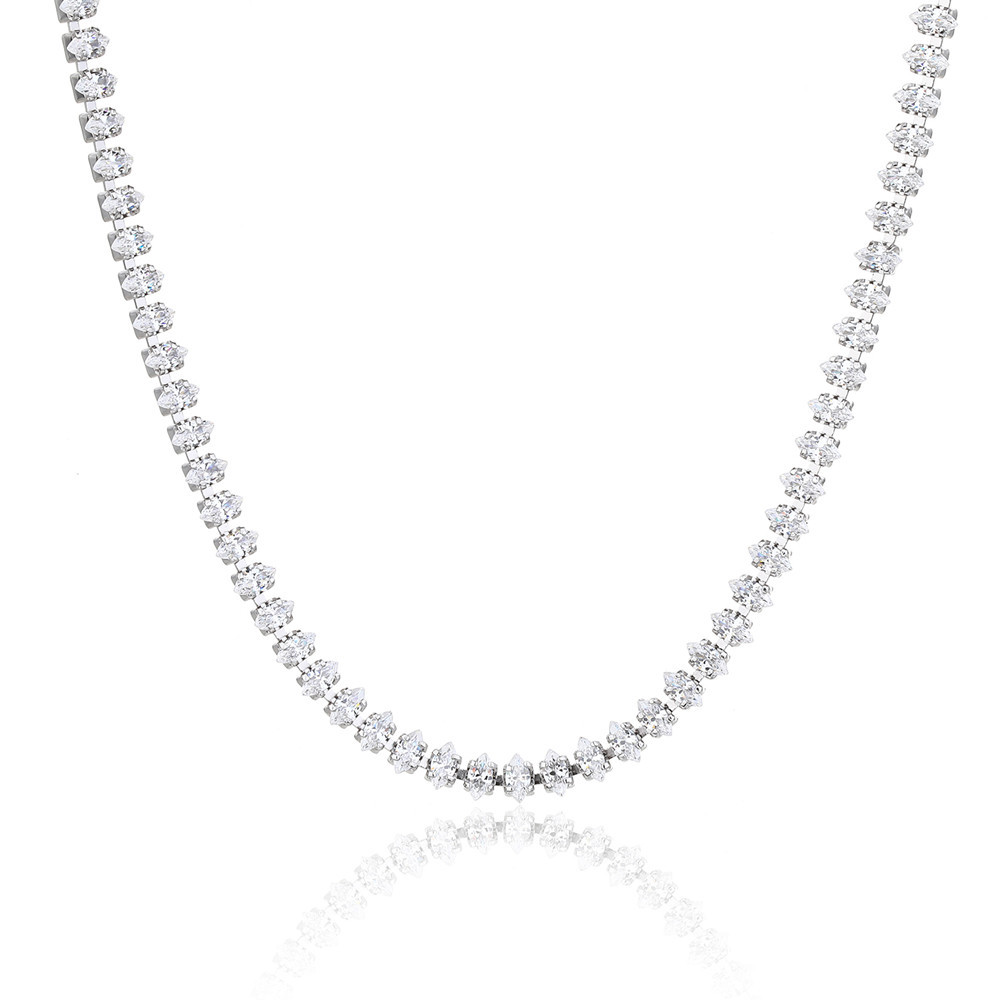 Tennis NecklacesDiscover the Tennis Necklaces product group for coordinated collections and OEM development.View Tennis Necklaces →