
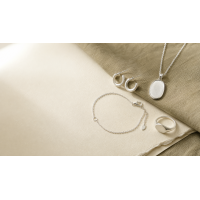

A launch plan built around evidence, not a large opening order
The client was a Dutch slow-fashion accessories brand preparing its first dedicated jewelry capsule. Instead of asking for a completely new collection with a large minimum order, the brand wanted to test a focused group of everyday pieces, collect customer feedback and scale only the styles that demonstrated repeat interest.
Client and commercial details have been anonymized. Quantities and timing are rounded project figures used to explain the workflow without disclosing the brand’s purchasing information.
Why this collection needed a different development route
The brand’s visual direction was already clear: quiet forms, soft geometry and jewelry that could be worn with linen, knitwear and simple office clothing. The difficulty was translating that direction into a product set that would be comfortable, repeatable and financially sensible for a first launch.
The initial brief covered three product families:
- small huggie earrings for daily wear;
- a slim adjustable chain with a removable pendant;
- a low-profile signet ring intended to be worn alone or stacked.
The client had reference images, but not yet a complete technical specification. That meant the early project needed to resolve practical questions before production: how large should the pendant feel on the body, how should the ring be sized for online sales, and which finish would be easier to maintain in a humid coastal climate?
Three commercial and product risks identified at the start
The collection looked cohesive on screen, but not yet in a technical file
The client had a moodboard rather than production-ready drawings. Without a shared specification, small differences in thickness, clasp shape and pendant scale could make the range feel inconsistent.
Comfort mattered more than decorative complexity
The target customer was expected to wear the pieces for long workdays. Sharp edges, heavy earrings or a ring that caught on knitwear would create returns even if the product looked attractive in photographs.
A first order needed to preserve cash for marketing and packaging
The brand did not want to tie up its launch budget in a large mixed-SKU inventory. A smaller pilot with clear replenishment logic was more useful than a broad assortment with uncertain demand.
Collection architecture: fewer components, more room to learn
Rather than treating the three product families as independent items, AphroSilver mapped them as a compact collection. The chain and pendant could be purchased together or separately, while the earrings and ring shared the same brushed silver visual language. This reduced unnecessary variation in the first sampling round and made the brand’s product photography easier to organize.
| Product group | Sample direction | Private-label detail | Validation focus |
|---|---|---|---|
| Mini huggie earrings 2 variations |
925 silver, rounded inner edge, lightweight profile | Laser mark on the inner surface where size allowed | Opening strength, edge comfort and pair consistency |
| Adjustable chain 2 lengths |
Fine cable chain with an extension section | Branded end tag and simple kraft-paper care card | Adjustment range and clasp handling |
| Removable pendant 1 form |
Soft oval profile with a satin-brushed face | Small back engraving positioned away from the visual center | Weight, front-to-back balance and finish uniformity |
| Low-profile signet ring 1 form |
925 silver with a shallow face and softened shoulders | Discrete inner-shank logo mark | Size conversion, stacking clearance and edge feel |
Implementation in four practical checkpoints
Checkpoint 01 · Brief translation
Turn the moodboard into a shared product sheet
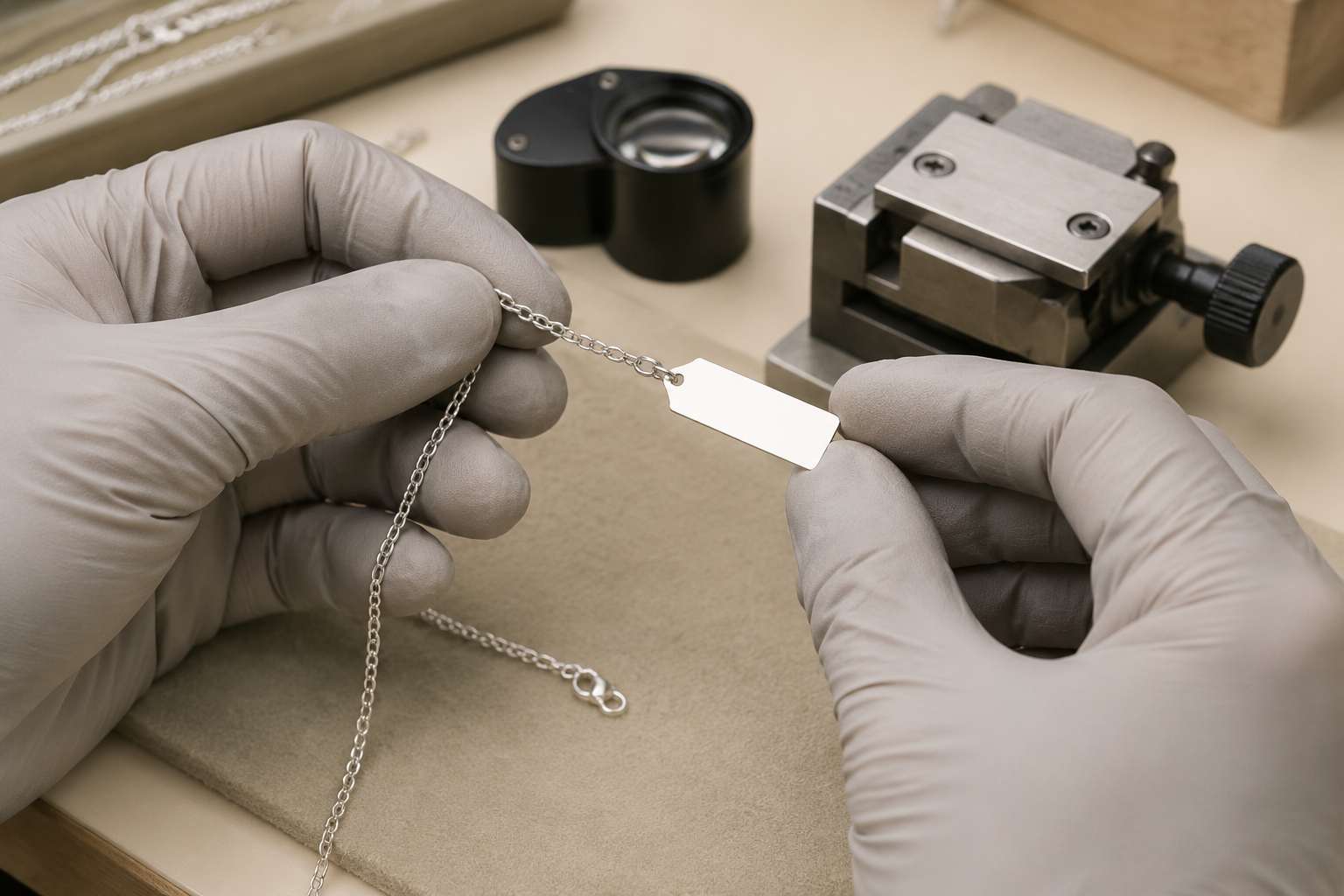
AphroSilver organized the reference images into a short product sheet covering target dimensions, surface direction, logo locations, ring size range and packaging assumptions. The purpose was not to freeze every detail immediately, but to ensure that both sides were discussing the same physical object.
Checkpoint 02 · Sample engineering
Adjust weight, edges and attachment points before decoration
The first sample round prioritized wearability. The pendant was kept visually slim, the huggie inner edge was rounded, and the chain extension was tested for practical adjustment. The ring face was reduced slightly so it would not dominate the hand when stacked with a plain band.
Checkpoint 03 · Brand application
Use restrained private-label details instead of oversized branding
The logo was applied in locations that would remain visible during ownership without competing with the design: the pendant back, the ring inner shank, the earring interior where feasible and a small branded end tag for the chain. The client also selected a matte kraft care card rather than a glossy card to match the brand’s packaging direction.
Checkpoint 04 · Pilot planning
Link sampling feedback to a controlled first order
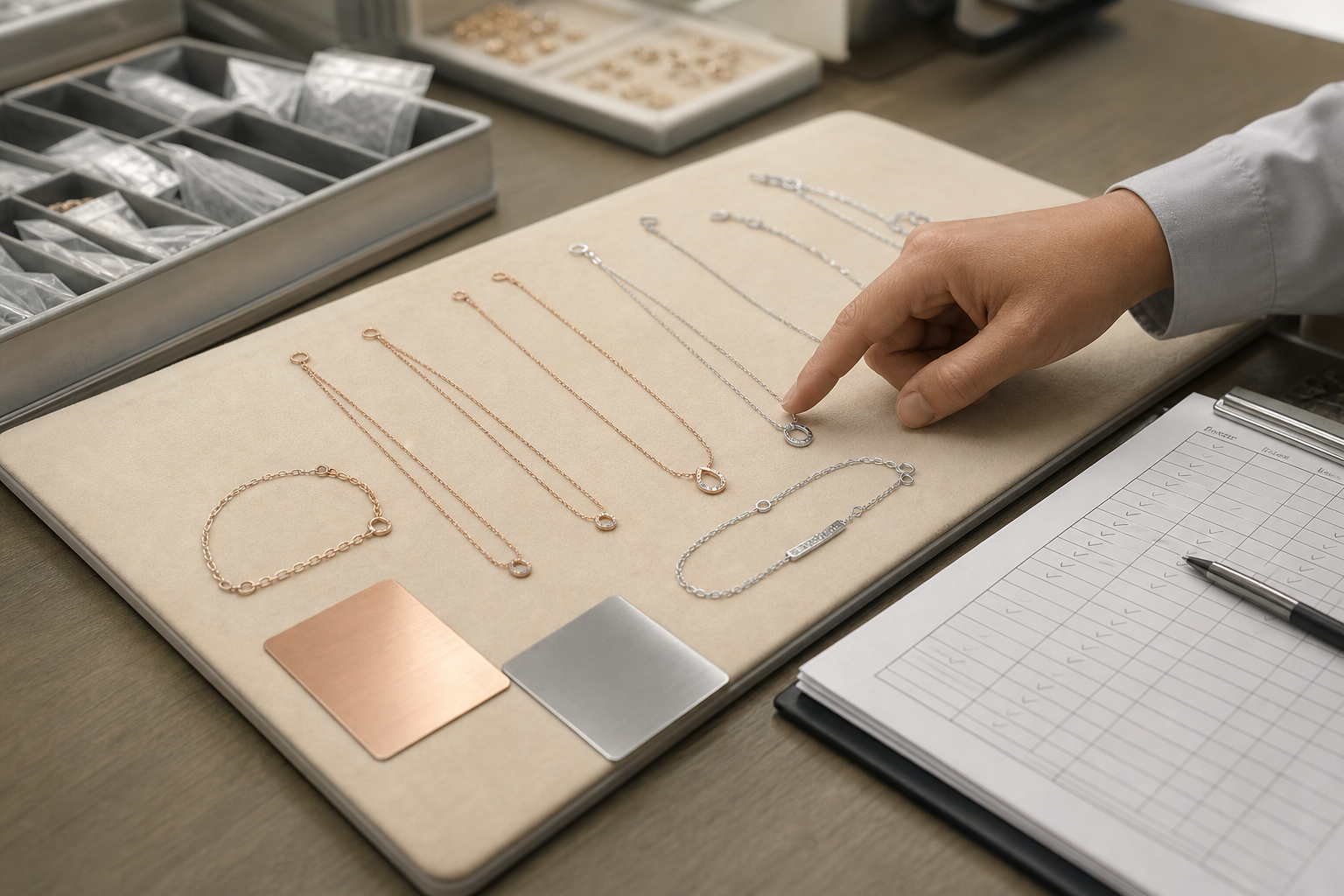
After reviewing the physical samples, the client chose a 600-piece pilot spread across six styles. The production file separated must-match specifications, such as logo position and ring dimensions, from acceptable visual variation, such as the natural character of the brushed surface. This created a more useful basis for inspection and replenishment.
What the sample review changed
The most valuable feedback was not a request for more decoration. It was a set of small adjustments that made the collection easier to wear and easier to sell online.
Ring sizing became a launch decision
The client initially considered offering too many sizes for a first release. Based on the intended customer profile and inventory pressure, the pilot was narrowed to a core range with a clear size guide. Additional sizes could be added after real sales data justified the inventory.
The pendant finish was made more forgiving
A fully polished face showed fingerprints and small handling marks more easily under photography lights. The client approved a satin-brushed face with a polished edge, creating a quieter appearance and a more practical presentation standard.
The logo was moved away from the visual center
The first logo position made the pendant feel more promotional than intended. Moving the mark to the back preserved brand ownership while keeping the front of the piece minimal.
Packaging information was added before bulk production
The care card was included in the production discussion early enough to confirm the tone, material and information hierarchy. This reduced the risk of receiving finished jewelry before the packaging copy and pack-out process were ready.
Project results at pilot-order stage
The project did not attempt to predict the entire collection’s long-term sales performance before launch. Its outcome was more practical: the brand had a coherent six-style range, a sample set that could be photographed and reviewed, a defined first order and a clear list of details to inspect during production.
“The useful part was not simply receiving samples. We now understand which details are essential to our brand, which choices affect daily wear and which styles should be tested first rather than ordered in depth immediately.”— Project contact, anonymized Dutch slow-fashion brand
Why this approach works for emerging jewelry brands
A first jewelry collection benefits from a development process that leaves room for learning. For brands that are not ready to commit to extensive tooling or a large opening assortment, a structured small-batch route can create a better balance between brand identity and commercial caution.
- Start with a focused product logic: use shared visual and component decisions so a small collection feels intentional.
- Validate physical behavior: inspect comfort, weight, clasp handling, finish and sizing—not only appearance on a screen.
- Keep private labeling proportionate: place the logo where it supports ownership without overpowering the design.
- Separate fixed standards from acceptable variation: record what must match exactly and what can naturally vary between handmade or finished surfaces.
- Use the pilot to inform the second order: let sell-through and customer feedback guide replenishment instead of guessing the full demand curve.
AphroSilver supports brands that need a practical route from reference direction to custom sterling silver jewelry development, private-label details and production preparation. For brands comparing established options and packaging requirements, the Private Label Silver Jewelry service can be used as a starting point for the conversation.
Planning a focused silver jewelry capsule?
Share your reference direction, target customer, product types, logo files and expected pilot quantity. A clear brief helps us assess the right balance of existing styles, product adaptation, private-label details and production planning for your stage.
Discuss Your Collection
